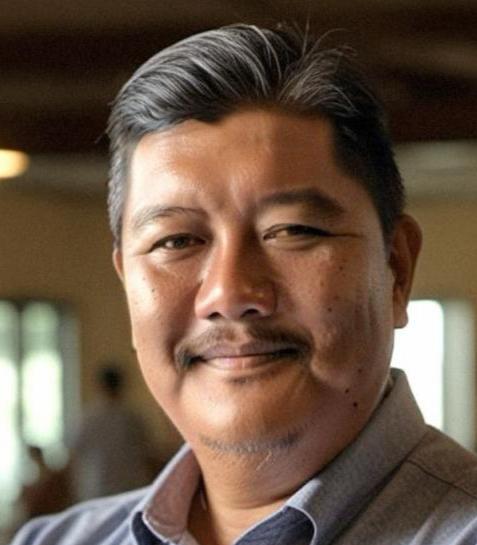
By Remy Majangkim
KOTA KINABALU: Democracy is built on the hard currency of public trust.
When voters step into a polling booth, they trade in a foundational assumption: that the names on the ballot represent genuine choices, forged in the fires of local struggles, civic advocacy, and community service.
Yet, as Sabah looks toward the high-stakes horizon of the upcoming general and state elections, a cynical, heavily financed playbook threatens to turn that democratic exercise into a shell game.
Look closely at the sudden proliferation of fringe coalitions, phantom third-party blocs, and overnight independent slates aiming to field candidates across all 25 parliamentary seats.
Beneath the slick banners and populist slogans lies a quiet, calculated architecture of disruption.
These aren’t grassroots awakenings; they are engineered spoilers designed to fracture the opposition, siphon targeted demographics, and buy political leverage through backdoor proxies.
Following the Paper Trail: Who Funds the Ghost Machines?
Let’s talk about the unvarnished reality of political logistics. Contesting a full slate across Sabah’s vast, demanding terrain is an expensive proposition.
Between Election Commission (SPR) statutory deposits (RM10,000 per parliamentary seat), local council permit bonds, 4WD transport logistics suited for interior tracks, command centers, and the critical mobilization of Polling and Counting Agents (PACAs), a serious campaign operation requires an immediate, heavy war chest.
When a brand-new movement or block, such as the maneuvers surrounding apparatuses like GBM and figures linked to blocs like Dr. Kanul, surfaces with the financial muscle to stake a claim across multiple districts without a transparent public fundraising trail or organic community backing, the math simply doesn’t add up on goodwill alone.
It takes a unique brand of political choreography to dress up tactical spoiler mathematics in the academic regalia of political science.
But no amount of theoretical framing can obscure the basic ledger of campaign finance. Where does the money actually come from?
The Incumbency Hedge: Deep-pocketed political heavyweights and ruling factions routinely channel discretionary funds through intermediaries and trusts to back proxy candidates.
Their sole objective? To dilute opposition strongholds and split anti-establishment votes.
Corporate Speculators: Business entities, concession holders, and tycoons hedging their bets across multiple political houses.
By bankrolling alternative candidates, they ensure that no matter who takes power, they’ve bought a backdoor seat at the table.
The Spoilers-for-Hire Budget: Cash front-loaded exclusively to cover the entry barrier for candidates whose only mandate is to act as a mathematical wedge.
The Arithmetic of the Spoiler
In first-past-the-post elections, multi-cornered fights are a playground for tactical sabotage. In constituencies where major parties lock horns in razor-thin margins, victory often hinges on a few hundred votes.
Proxy candidates don’t need to win to be valuable; they just need to bleed enough votes away from a genuine contender.
They capture the raw, justified anger of a weary electorate and funnel it into a dead-end vehicle, effectively neutralizing the protest vote while allowing incumbents or puppet-masters to slip through the chaos with a fractured mandate.
The True Cost: Killing Public Trust and the Call for Transparency
The most corrosive casualty of this political theater isn’t just distorted seat tallies; it is the deep-seated cynicism it breeds among ordinary Sabahans.
When voters realize some independent banners are merely well-funded pawns, they paint genuine, ground-up independent voices, who have spent years fighting for their communities out of their own pockets, with the same brush of suspicion.
If these minor parties and third-party blocs possess a genuine, renewed fighting spirit, they owe the public absolute transparency.
Rather than hiding behind independent veneers or proxy movements designed to fracture the electorate, they should openly declare their support or alignment with the major political forces that genuinely represent the people.
It is time to strip away the veneer. True political reform cannot be outsourced to ghost machines or funded proxies.
If Sabah’s democratic future is to mean anything, the electorate must develop an unsparing eye for manufactured politics, demand real accountability, demand transparency in funding, and demand the courage to lay cards face up on the table before nomination day.