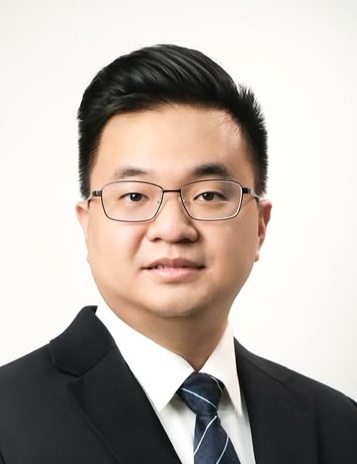
SANDAKAN: The upcoming Budget 2027 should prioritise sustainable economic growth, support struggling small businesses and address development inequalities rather than becoming an election-oriented budget filled with short-term handouts, said Tanjong Papat Assemblyman Alex Thien.
Thien said that while financial assistance remains necessary to help Malaysians cope with rising living costs, the Federal Government must strike a balance between immediate relief and long-term economic development.
“Budget 2027 should not become an exercise in distributing election goodies merely to gain public support. Malaysians need a budget that strengthens the economy, creates employment opportunities and delivers meaningful improvements to their lives.
“Short-term assistance may ease financial pressure, but it cannot replace long-term solutions to the structural challenges facing our country,” he said.
Thien also cautioned that Malaysia’s growing financial commitments leave increasingly limited fiscal room for development and other national priorities.
“Based on Budget 2026 estimates, civil service emoluments, pensions and debt servicing alone account for approximately 62 per cent of federal operating expenditure, amounting to over RM210 billion.
“With such a significant portion of expenditure already committed, we must be prudent in managing public finances. Budget 2027 must look beyond immediate political considerations and focus on strengthening economic productivity, fiscal sustainability and long-term national development,” he said.
Thien also expressed concern over the increasingly challenging business environment faced by micro, small and medium enterprises (SMEs), particularly small traders, family-run businesses and local entrepreneurs.
He said many businesses have struggled in recent years with rising operating costs, taxation pressures, regulatory compliance requirements and shrinking profit margins, with some eventually being forced to close down.
“Small businesses are the backbone of our local economy. Yet instead of helping them grow, we must ask whether some of our policies are making it increasingly difficult for them to survive.
“The government should review the cumulative impact of taxation and compliance costs on micro-enterprises. We cannot expect small businesses to keep absorbing additional costs while their profit margins continue to shrink,” he said.
Thien hoped Budget 2027 would introduce practical measures to ease unnecessary regulatory burdens, provide appropriate tax relief, improve access to affordable financing and support the sustainability of small businesses.
“A successful budget should not only attract billion-ringgit investments from major corporations. It must also create an environment where small businesses can survive, expand and provide employment opportunities for ordinary Malaysians.”
Turning to Sabah, Thien stressed that Budget 2027 must ensure a fairer distribution of federal development resources, taking into account the state’s longstanding infrastructure and development gaps.
“Fairness does not necessarily mean giving every state the same amount. It means recognising the different development needs of each state and allocating sufficient resources to close the existing gaps.
“Sabah continues to face persistent problems involving water supply, electricity reliability, road connectivity and inadequate public infrastructure. These are basic necessities that should have been addressed long ago,” he said.
Citing the Auditor-General’s Report Series 2/2026, Thien noted that only four of the 35 work packages under Phase 1 of the Sabah Pan Borneo Highway had been completed as of March 31, 2026, while nine were classified as sick projects and another 13 were behind schedule.
“The Pan Borneo Highway is a clear example of Sabah’s development challenges. More than a decade after the project was planned, we are still struggling to complete essential road infrastructure.
“Sabah cannot continue to be left behind. The Federal Government must ensure sufficient development allocations, stronger project monitoring and clear completion timelines, rather than merely announcing impressive figures every year,” he said.
Thien stressed that the effectiveness of a budget should be measured by actual implementation and outcomes, not simply the amount of funding announced.
“There is little meaning in announcing billions of ringgit if projects continue to face delays and people do not see improvements on the ground. What matters is not merely how much money is allocated, but whether the projects are actually delivered.”
Meanwhile, Thien reminded the Federal Government that ordinary development allocations for Sabah must not be confused with the state’s constitutional entitlement to 40 per cent of the relevant federal net revenue derived from Sabah.
He stressed that the entitlement under Articles 112C and 112D and the Tenth Schedule of the Federal Constitution is a separate constitutional obligation and must not be treated as a substitute for federal development expenditure.
“Federal development allocations are the government’s responsibility towards balanced national development, while Sabah’s 40 per cent entitlement is a constitutional right.
“These are two separate obligations. The Federal Government must not use development allocations as justification for reducing or delaying the fulfilment of Sabah’s constitutional entitlement,” he said.
Thien added that Sabah’s constitutional entitlement should be honoured independently of the annual budget allocation, while the state must continue receiving adequate federal development funding to address its infrastructure backlog.
He said Budget 2027 should ultimately be fair to ordinary Malaysians, small businesses and states that have historically lagged behind in development.
“The success of Budget 2027 should not be measured by how many attractive announcements are made, but by whether businesses can survive, workers can earn a decent living, public finances remain sustainable and states like Sabah can finally close their development gap,” he said.