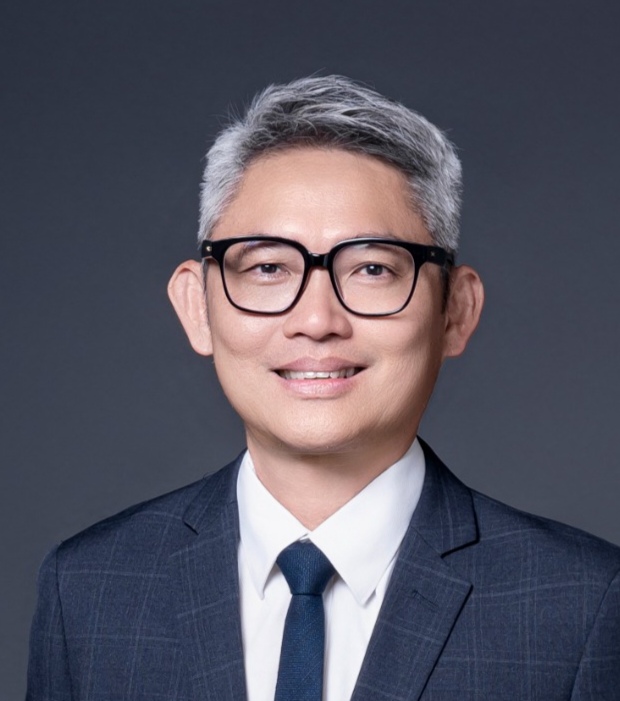
Photo Caption: Louis Su: Rising energy and transportation costs are affecting the competitiveness of the agricultural sector; Sabah should assess new energy solutions to reduce long-term operating costs.
(KOTA KINABALU: With the Sabah Government identifying agriculture, fisheries and the food industry as key economic sectors, Malaysia-China Chamber of Commerce (MCCC) Sabah Vice President Louis Su said the next step is to translate policy directions into viable and commercially viable projects, while strengthening industry support systems to encourage greater private-sector participation.
He said from the business community’s perspective, investors are concerned not only with policy direction, but also with project implementation, infrastructure, administrative efficiency and the effectiveness of public-private cooperation.
Louis made the remarks in response to Sabah Deputy Chief Minister II and Finance Minister Datuk Seri Panglima Masidi Manjun’s recent statement that the state government would prioritise the development of agriculture, fisheries and the food industry, while strengthening inter-departmental coordination to ensure effective implementation of related initiatives.
He said that under the leadership of MCCC Sabah President Datuk Dexter Lau, the chamber continues to focus on Sabah’s economic and business development while promoting greater engagement and cooperation between the government and business community.
“For the agrifood sector, policy support is important, but it must also be accompanied by practical industry considerations, including improvements in cold-chain logistics, warehousing, transportation, financing and market access,” he said.
Louis pointed out that Sabah possesses abundant land, marine and agricultural resources, but the development of the sector involves multiple stages, from production and transportation to processing and marketing. Greater coordination among the relevant agencies is therefore necessary to improve overall efficiency and competitiveness.
He suggested that the state government consider adopting public-private partnership (PPP) models for projects with development potential, while strengthening engagement with chambers of commerce, industry associations and businesses during the planning stage to ensure projects are aligned with market demand and avoid a disconnect between production and market needs.
On the rising cost of energy and transportation, Louis said this was another operational challenge that the agriculture and fisheries sectors must address.
He noted that higher fuel and transportation costs would directly increase the cost of moving agricultural and fisheries products from farms and fishing grounds to collection centres, processing facilities and markets, ultimately affecting the operating margins of businesses and farmers as well as the competitiveness of their products.
He therefore suggested that alongside agricultural modernisation, the state government could assess the application of new energy and energy-efficient technologies across the agricultural supply chain, including electric vehicles, solar power generation and energy storage systems, with pilot projects initially focused on areas where such technologies are most practical, such as farms, warehouses, cold-chain facilities and short-distance transportation.
“New energy may not immediately replace conventional fuel across all areas, but gradual adoption in suitable sectors, supported by charging infrastructure and solar energy systems, could help reduce long-term energy and operating costs,” he said.
Louis added that integrating new energy, smart agriculture and modern logistics could help the agricultural sector manage energy price fluctuations, improve overall production and transportation efficiency, and strengthen the competitiveness of Sabah’s agricultural products in both domestic and export markets.
He said MCCC Sabah would continue to leverage its role as a business platform to facilitate business exchanges, investment matching and market expansion, enabling more local businesses, particularly small and medium-sized enterprises (SMEs), to participate in the development of the sector.
“The government creates a conducive business environment, while businesses bring capital, technology, management expertise and market access. Effective cooperation between both sides is essential to transform Sabah’s abundant resources into sustainable economic value.”