TAWAU: Netizens, especially in Sabah, are reminded not to use social media as a platform to insult, embarrass, or belittle the institution of the Yang di-Pertua Negeri (TYT).
Instead, they should embrace the Second Principle of the Rukun Negara, Loyalty to the King and Country, in every opinion expressed.
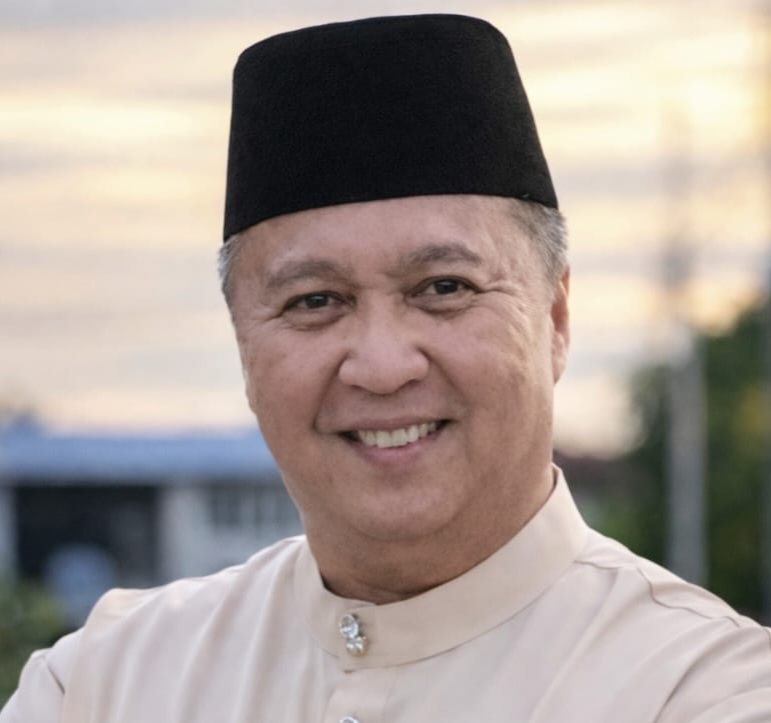
Social activist and advisor to the Sabah Drug Prevention and Crime Organization (PPDJS), Mohd Zaki Harry Susanto, stated that freedom of speech is a right of every citizen; however, its exercise must be accompanied by a sense of responsibility, decorum, and respect for the institutions that are part of the country’s governance system.
He emphasised that social media should not be seen as a ‘license’ for anyone to write or disseminate anything without considering facts, laws, and societal sensitivities.
“The Rukun Negara is not merely a recitation during gatherings or official events. The five principles serve as a guide to cultivate citizens who understand their responsibilities towards religion, the nation, the Constitution, and the governing institutions.
“The Second Principle, which is Loyalty to the King and Country, must be genuinely embraced, especially in the age of social media where everyone can be a messenger of information and shape public perception,” he said.
He made these remarks while commenting on the ongoing criticisms from some social media users towards the TYT institution in Sabah recently.
Zaki noted that the principle of Loyalty to the King and Country reflects the people’s commitment to respecting the constitutional monarchy system and upholding the sovereignty and peace of the nation.
He added that while the Yang di-Pertuan Agong is the Supreme Head of State in the constitutional monarchy system, the spirit of respect for the governing institutions must also be understood in the context of the head of state institution.
“In the context of Sabah, the position of the Yang di-Pertua Negeri is significant as outlined in the Sabah State Constitution.
“Therefore, the public must understand the difference between expressing opinions or criticisms on an issue and actions that insult or demean an institution,” he said.
He noted that a mature democratic society does not mean that citizens can attack all parties without limits.
On the contrary, he stated, the maturity of democracy is evident when citizens can express their views factually, rationally, and respectfully, even when faced with differing opinions.
“Constructive criticism has never been a problem. We have the right to correct, provide opinions, and voice our dissatisfaction.
“However, freedom of speech is not freedom without boundaries.
“We must ensure that criticism does not turn into slander, incitement, or insults that could undermine social harmony and respect for institutions,” he said.
Zaki mentioned that social media users need to be more cautious because every statement, image, video, or post shared can spread rapidly and impact public perception.
“Sometimes a post is made out of emotion, but its effects can be much larger when widely shared.
“That’s why, before hitting the ‘share’ button, netizens should ask themselves if the information is true, based on facts, and beneficial to society.
“If the intention is merely to humiliate, incite hatred, or belittle certain parties, then we need to pause and reconsider,” he said.
He added that embracing the Rukun Negara has become increasingly important in the digital communication landscape, where various views, information, and sentiments can spread uncontrollably.
He emphasised that as a nation made up of diverse races, religions, and cultures, Malaysia needs citizens who can manage differing opinions maturely.
“Differences in opinion are common in a democratic country. We don’t have to agree on everything.
“However, these differences should not serve as an excuse for us to insult one another or undermine the dignity of institutions that are part of the national system,” he said.
Zaki mentioned that the institution of the Governor also holds a unique position in states without a Sultan, including Sabah, Sarawak, Penang, and Malacca.
He stated that in the context of Sabah, the Yang di-Pertua Negeri is the head of the state, and the significance of this institution must be understood and respected by the people.
“Netizens need to distinguish between individuals, policies, current issues, and institutions.
“Not everything that happens should be interpreted as an attack on institutions.
“If there are disagreements, express your views maturely and respectfully. Use facts, not slander. Use arguments, not insults,” he said.
He noted that social media should be utilized as a space to build awareness, spread knowledge, and strengthen unity, rather than a platform for inciting hatred.
He emphasized that the appreciation of the Second Principle of the Rukun Negara should be reflected in actions, including being mindful of our words and behavior in the digital space.
“Loyalty to the King and Country is not just a patriotic phrase.
“It is a value that requires us to respect the country’s governance system, uphold the Constitution, safeguard sovereignty, and ensure that peace and harmony are maintained.
“In today’s digital world, embracing this principle also means we must be responsible for every word we write and every piece of information we share,” he said.
Zaki urged Malaysians to make the Rukun Negara a moral compass and guide in their lives, including when interacting on social media.
“Social media can be a tool that unites or divides society.
“The choice is in our hands.
“Therefore, let us use the Rukun Negara as our guide and truly embrace the Principle of Loyalty to the King and Country.
“We may have differing opinions, but we must ensure that these differences do not diminish our respect, manners, and responsibilities as Malaysian citizens,” he added.