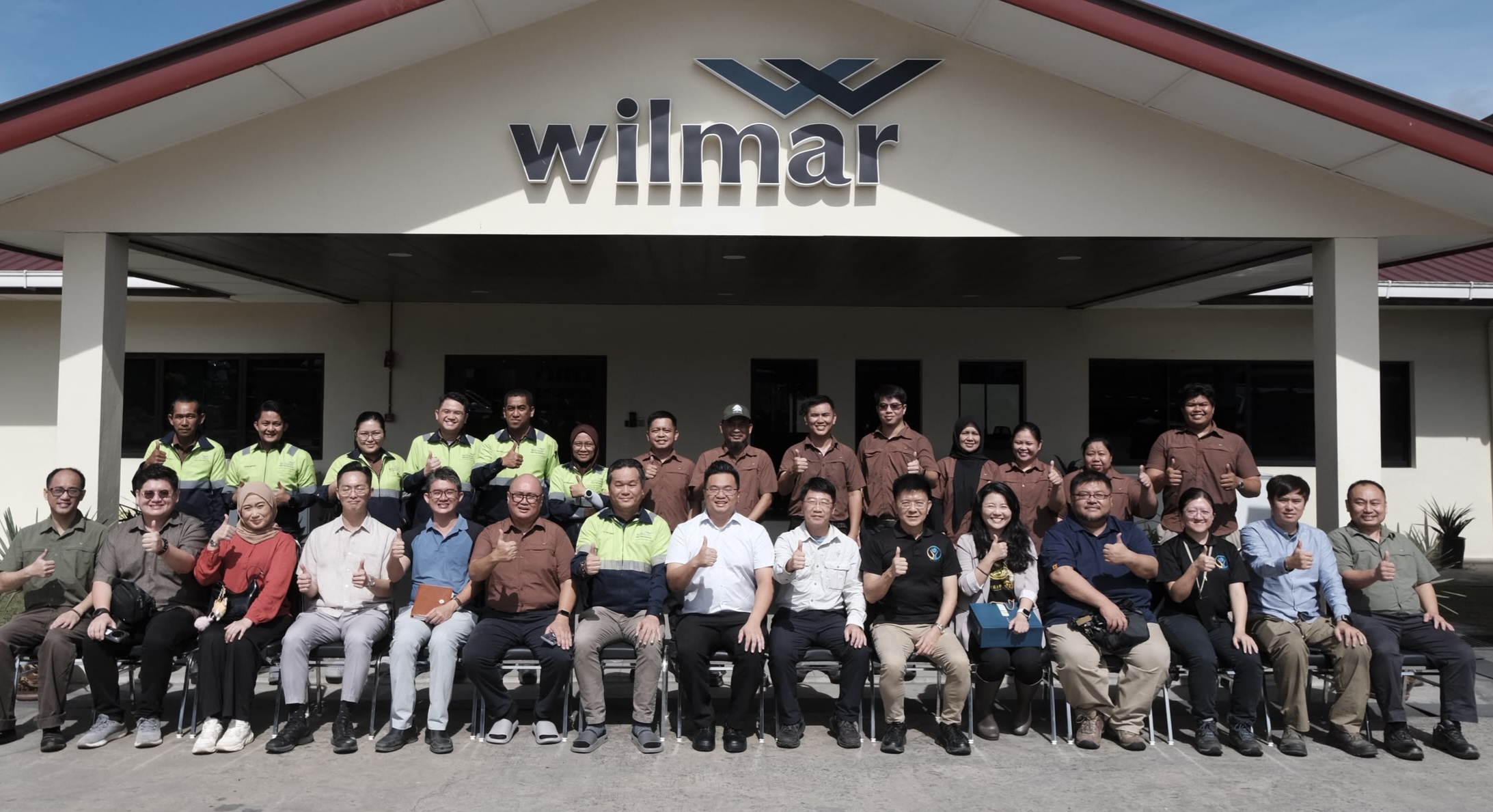
SANDAKAN: In an effort to strengthen cooperation between Taiwan and Sabah in the areas of forest management, forest products and wood science research, oil palm industry development, scientific innovation, and sustainable resource management, a delegation from the Department of Forestry and Natural Resources, National Ilan University (NIU), Taiwan, recently visited Sandakan for a two-day academic and industrial exchange programme facilitated by Tanjong Papat State Assemblyman YB Alex Thien Ching Qiang and coordinated by the Malaysia Talent Education and Industry-Academia Collaboration Association (M-TEIA).
The delegation was led by Associate Professor Dr. Chih-Hsin Chung, Chair of the Department of Forestry and Natural Resources, accompanied by Professor Dr. Tzu-Cheng Chang, Associate Professor Dr. Pei-Yu Kuo, postgraduate researcher Mr. Jia-Tsung Cheng, M-TEIA Chairman Mr. Pang Thou Chong, and Project Coordinator Ms. Pang Sheau Chyan.
On 18 June, the delegation visited the Wilmar’s Palm Oil Mills in sapi region, sandakan to gain first-hand insights into Sabah’s palm oil industry, renewable energy initiatives, sustainable production practices, and circular economy applications.
During the visit, Wilmar’s Mill Operations General Manager, Ir. Lo Yee Hang, briefed the delegation on the development of Sabah’s palm oil sector, industry trends, production systems, and sustainability strategies. The delegation was also given a guided tour of the mill’s processing facilities and engaged in discussions with representatives from various departments on research, innovation, and future collaboration opportunities.
During the discussions, both Wilmar representatives and the Taiwan delegation noted the significant potential of biomass by-products generated by the palm oil industry, particularly Empty Fruit Bunches (EFB) and Palm Kernel Shells (PKS). They also exchanged views on the possibility of unlocking valuable compounds and useful substances from palm oil mill effluent (POME) through further research and technological innovation, creating opportunities for higher value-added applications and supporting the industry’s sustainability goals.
Alex Thien said Sabah’s palm oil industry remains one of the state’s key economic pillars, contributing significantly to economic growth and employment opportunities.
“As the industry continues to embrace automation, digitalisation, and green transformation, the demand for skilled talent, research innovation, and sustainable management is becoming increasingly important. Strengthening collaboration between universities, research institutions, and industry players is essential in developing future-ready talent and driving industrial advancement,” he said.
The following day, on 19 June, the delegation visited the Forest Research Centre (FRC), where they were warmly received by Dr. Arthur Chung, Deputy Chief Conservator of Forests (Research & Development), together with Mr. Zamrie Imiyabir, Head of the Forest Produce and Products Programme (FPP), and officers from the programme.
The visit began with presentations from both parties, providing an overview of their respective institutions, research activities, and areas of expertise. Discussions focused on forestry research, scientific innovation, talent development, carbon management, sustainable education, and potential avenues for future collaboration.
The delegation was subsequently taken on a tour of several research facilities and laboratories under the Chemistry and Phytochemistry Section as well as the Wood Science and Utilisation Section. Facilities visited included the sawmill, wood workshop and carpentry unit, wood testing laboratory, xylarium, wood anatomy laboratory, and formaldehyde emission laboratory. During the lunch break, the delegation also had the opportunity to visit the RDC Skywalk.
Alex Thien noted that Sabah possesses world-renowned tropical rainforest resources and rich biodiversity, providing significant advantages in forest conservation, natural resource management, carbon sequestration research, and ecological studies.
“With growing global attention on environmental protection, climate change, and sustainable development, strengthening scientific research, talent cultivation, and international cooperation has become increasingly important. Sabah and Taiwan share many common interests in forestry research, natural resource management, carbon governance, and sustainability education, creating strong potential for future collaboration,” he said.
He added that academic exchanges such as these not only enhance mutual understanding between institutions and industries but also create opportunities for joint research projects, student and researcher exchanges, technical training, internships, and technology transfer.
Alex Thien expressed his appreciation to M-TEIA for coordinating the programme and thanked both Wilmar Palm Oil Mill and the Sabah Forestry Department for their warm hospitality and support throughout the visits.
He said the two-day exchange programme had provided a valuable platform for knowledge sharing and networking, while laying a solid foundation for future collaboration between Taiwan and Sabah in forestry research, sustainable resource management, agricultural technology, renewable energy, talent development, and industry-academia partnerships.
“Through stronger international cooperation and knowledge exchange, we can jointly contribute towards green growth, innovation, and a more sustainable future for the next generation,” he added.