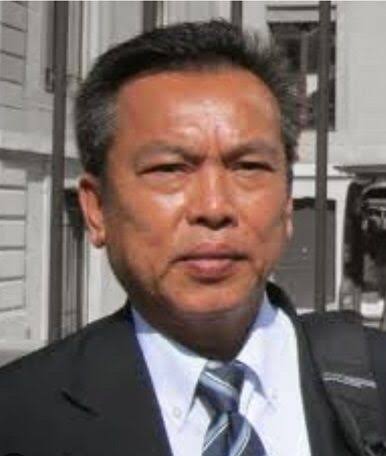
Daniel John Jambun, President Borneo’s Plight in Malaysia Foundation (BoPiMaFo)
KOTA KINABALU: Borneo’s Plight in Malaysia Foundation (BoPiMaFo) takes note of reports that approximately 90% of Sabah’s oil palm plantations are owned by companies based outside Sabah.
If this figure is accurate, Sabahans must ask a fundamental question:
How can a state blessed with abundant natural resources remain one of the poorest regions in Malaysia?
For decades, Sabah has been a major contributor to Malaysia’s economy through its oil and gas, timber, plantation agriculture, fisheries and other natural resources.
Yet many Sabahans continue to face poverty, underdevelopment, inadequate infrastructure, limited employment opportunities and a lower standard of living than should reasonably be expected from a resource-rich territory.
The answer may lie in a simple but often overlooked reality:
Producing wealth is not the same as owning wealth.
A plantation may be located in Sabah.
The land may be in Sabah.
The resources may come from Sabah.
The workers may be Sabahans.
But if ownership, control, profits and decision-making are concentrated elsewhere, much of the economic value generated will inevitably flow elsewhere as well.
This is not merely a plantation issue.
It is a structural issue.
It raises the same questions Sabahans have been asking regarding:
– Oil and gas resources;
– Plantation industries;
– Timber concessions;
– Mining activities;
– Major infrastructure projects;
– Strategic state assets; and
– Sabah’s constitutional revenue entitlements.
The central question remains unchanged:
How much of the wealth generated from Sabah actually remains in Sabah?
Economic activity alone does not guarantee prosperity.
Ownership matters.
Control matters.
The retention and reinvestment of wealth matter.
A region can produce enormous wealth and yet remain relatively poor if the majority of that wealth is extracted and accumulated elsewhere.
This is why discussions about Sabah’s future must move beyond measuring production and investment alone.
We must also examine who owns the assets, who receives the profits, who controls the industries and who ultimately benefits from the wealth generated.
BoPiMaFo wishes to make it clear that we are not opposed to external investment.
Investment has played an important role in Sabah’s economic development and has contributed to employment, exports and business activity.
The issue is not where investors come from.
The issue is whether Sabahans themselves are being given meaningful opportunities to participate as owners, shareholders, entrepreneurs and decision-makers in the industries built upon Sabah’s resources.
A healthy economy requires both investment and local participation.
Without sufficient local ownership, economic growth can occur without genuine economic empowerment.
SABAH CAN LEARN FROM SARAWAK’S EXPERIENCE
The comparison with Sarawak deserves serious consideration.
Both Sabah and Sarawak are richly endowed with natural resources.
Both joined Malaysia in 1963.
Yet today, Sarawak has succeeded in increasing state participation in strategic industries, strengthening its fiscal position, building substantial reserves and creating mechanisms that allow more resource-derived wealth to be retained and reinvested for the benefit of its people.
No model is perfect and every state faces its own challenges.
However, Sarawak’s experience demonstrates an important principle:
Natural resources alone do not create prosperity.
Prosperity is created when a significant portion of the value generated from those resources is retained, managed and reinvested for the benefit of the local population.
Sabah should not be asking why Sarawak is doing better.
Sabah should be asking why similar outcomes have not been achieved here despite our own vast natural wealth.
This is not about competition.
It is about learning from successful policies and ensuring that Sabahans receive a fair return from Sabah’s resources.
BoPiMaFo therefore calls upon the Sabah Government to publish comprehensive and transparent data concerning:
1. Plantation ownership in Sabah;
2. Beneficial ownership of major plantation companies;
3. Distribution of profits and dividends;
4. Land ownership patterns;
5. Tax contributions arising from plantation activities;
6. The level of Sabah participation in strategic industries; and
7. The amount of wealth generated annually from Sabah’s natural resources compared to the amount retained within Sabah.
Transparency is the first step towards meaningful reform.
Sabahans deserve to know whether the economic model that has operated for decades is truly serving their interests.
A resource-rich Sabah should not have poor Sabahans.
For too long, Sabah has exported its resources, imported dependency and retained poverty.
That cycle must end.
The wealth of Sabah must increasingly benefit the people of Sabah.