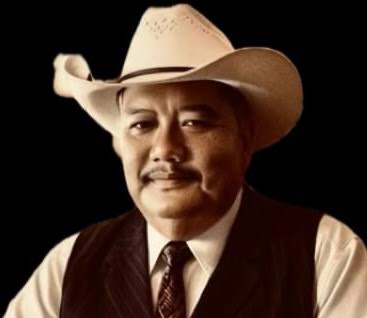
By Remy Majangkim
“Democracy creates the best liars, and time gives them the practice to master the craft.”
KOTA KINABALU — When Gabungan Rakyat Sabah (GRS) Secretary-General Datuk Armizan Mohd Ali projected securing more than 15 parliamentary seats at the next general election, the declaration was framed as a grand rallying cry for regional strength.
To hear the coalition’s strategists tell it, an expanded electoral footprint is the definitive key to commanding respect in Putrajaya.
Yet, step away from the press conferences and onto the streets of Kota Kinabalu, Sandakan, or Tawau, and a starkly different reality takes hold.
For the average Sabahan, these ambitious seat projections are not a promise of empowerment, but an illusion of mandate a high-stakes numbers game played while the state’s foundational infrastructure quietly collapses underneath.
The Reality on the Ground: Dry Taps and Systemic Failures
The fundamental flaw in GRS’s projection lies in a basic disconnect: political leverage in Parliament means very little to a household with dry taps. Time does not heal structural neglect; it compounds it.
While coalition leaders calculate parliamentary arithmetic, voters are forced to deal with the daily indignities of systemic governance failures:
The Water Crisis & Cartels: Chronic- municipal water shortages have moved past simple inconvenience into widespread economic disruption.
Reports of entrenched water cartels and supply syndicates operating with apparent impunity leave citizens questioning whether the state administration possesses either the political will or administrative capability to enforce basic oversight.
Infrastructure Stagnation: Pothole-ridden highways, frequent power grid trippings, and lagging rural connectivity stand in sharp contrast to the grand narrative of a thriving, self-reliant state government.
When a leadership cannot reliably guarantee basic public utilities, asking for a renewed mandate under the guise of “regional strength” reads as a diversion from local accountability.
MA63: Legal Precision vs. Political Posturing
GRS often positions itself as Sabah’s primary defender under the Malaysia Agreement 1963 (MA63).
However, public confidence in this platform is wearing thin. Critics point out that despite holding state power and sitting as key partners in the Federal Government, progress on fundamental constitutional guarantees—most notably the 40% net revenue entitlement remains sluggish. Adding names to a committee doesn’t equal progress on MA63.
The Borneo Split: Quiet Precision vs. Public Posturing
The contrast across the border in Sarawak makes Sabah’s ongoing administrative delays even harder to overlook.
While Sarawak’s Gabungan Parti Sarawak (GPS) operates with quiet, legal precision and a disciplined single-bloc voting strategy, Gabungan Rakyat Sabah (GRS) relies heavily on public seat projections despite navigating fragmented coalition dynamics.
Economically, Kuching has established concrete state leverage pioneering PETROS and imposing a lucrative State Sales Tax on energy sector revenues. Kota Kinabalu, on the other hand, remains caught in a loop of continuous dependency on federal budget allocations.
This divergence is most starkly reflected in public sentiment: GPS holds a robust local mandate built on tangible economic gains and state empowerment, while GRS faces widespread voter frustration fueled by unresolved, everyday utility failures.
The Rising Groundswell: Alternatives on the Horizon
This growing disillusionment explains why voters are increasingly looking toward rival local forces. Parties like Warisan, KDM, and STAR continue to hold significant appeal because they tap directly into immediate local grievances:
Parti Warisan continues to position itself as a fierce critic of administrative incompetence, zeroing in on utility failures, governance, and constitutional rights.
KDM capitalizes on deep-rooted economic and social frustrations within the Kadazandusun-Murut heartlands, where national and state-level promises feel furthest away.
STAR maintains its pull among voters who want an uncompromising stance on native rights and MA63 entitlements.
The Verdict: A Mandate Requires a Foundation
A true mandate cannot be constructed purely out of political mathematics. Accumulating 15 or 20 parliamentary seats may give a coalition a seat at the table in Putrajaya, but if those seats are won above an under-serviced and frustrated electorate, that power remains a house of cards.
If GRS hopes to turn its parliamentary ambitions into a genuine, lasting regional fortress, it must first prove it can deliver on the most fundamental duties of governance.
Until the taps run clean and constitutional covenants yield real revenue, grand electoral projections will remain what they currently appear to be: an illusion of power.