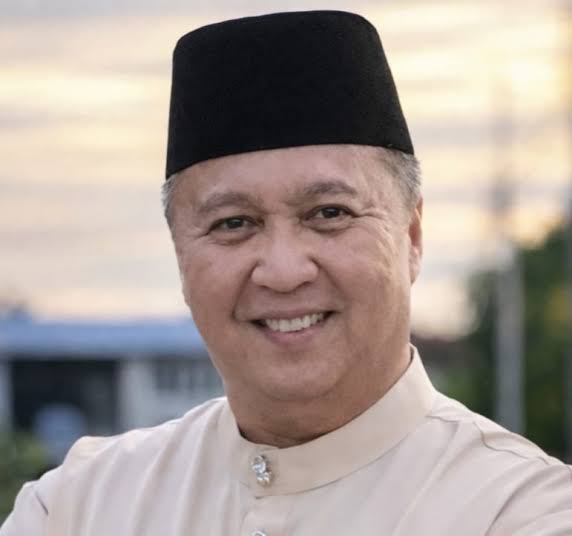
TAWAU: The office of the Yang di-Pertua Negeri (TYT) of Sabah and Istana Seri Kinabalu must be upheld as key pillars supporting the state’s structure and stability, said Sabah community activist Mohd. Zaki Harry Susanto.
He acknowledged that differing opinions are natural in a democratic society, but emphasized that freedom of expression should not extend to actions that belittle, insult, or undermine the dignity of the Yang di-Pertua Negeri, the Malay Rulers, or the royal institutions.
In his view, publicly demeaning these institutions runs counter to Malaysian cultural values, particularly the Eastern traditions of respect and decorum, and risks weakening social cohesion and national stability.
“Democracy allows people to express views, challenge policies, and engage in public debate—but such freedoms must be exercised with civility, accountability, and regard for constitutional institutions,” he said.
“We must ensure that free speech is not misused to humiliate the TYT or mock the Sabah State Palace,” he said.
He made this statement in response to comments from several netizens attempting to degrade the TYT Sabah on social media.
Mohd. Zaki, a former police officer, stressed that the public should recognize the TYT not merely as a ceremonial figurehead, but as the constitutional Head of State of Sabah, with defined roles and responsibilities under the state’s legal framework.
According to the official Sabah government website, the TYT is appointed by His Majesty the Yang di-Pertuan Agong on the recommendation of the Chief Minister, with each term lasting four years as stipulated in the State Constitution.
“When an individual is appointed to this role through due constitutional process, their position deserves public respect,” he said.
“To question or attack the institution of the TYT is effectively to challenge the constitutional foundation upon which Sabah’s governance rests,” he noted.
He highlighted that the TYT also serves as a unifying symbol—representing the state’s sovereignty, continuity, and unity—particularly important in Sabah’s multi-ethnic, multi-religious, and culturally diverse society.
State institutions such as the Yang di-Pertuan Agong, the Malay Rulers, and the Governors play not only a historical role but also function as stabilizing forces within Malaysia’s constitutional democracy.
These institutions act as guardians of societal rights and traditions, safeguarding the place of Islam and local customs that form part of the nation’s heritage and identity.
“In Sabah’s context, the TYT embodies both the leadership and sovereignty of the state, with authority clearly established under the State Constitution,” he explained.
Mohd. Zaki also cautioned against viewing individuals who previously held political or administrative roles through a partisan lens after their appointment as TYT. Once appointed, he said, they should be respected in their new constitutional capacity, separate from past political affiliations.
He urged the public to distinguish between legitimate critique of past actions and personal attacks on the office of the Head of State.
“If disagreements arise over government decisions, they should be addressed through proper democratic and legal channels,” he said.
“Social media should not become a platform to target or degrade a TYT who has stepped away from active politics,” he added.
He warned that disrespect toward national institutions not only threatens domestic harmony but may also damage Malaysia’s image internationally.
“Sabah is recognized for its diversity and its ability to maintain peace through constitutional governance,” he said.
“We should not compromise this achievement due to political disagreements or impulsive online reactions,” he emphasized.
Mohd. Zaki called on Sabahans to actively protect the dignity of Istana Seri Kinabalu and the TYT, stressing that respect for these institutions is a collective duty.
“We may belong to different parties, hold different views, or support different policies—but we must remain united in upholding the Constitution and our state institutions,” he said.
“Loyalty to the King and the Nation, as stated in the Rukun Negara, should not be just a slogan recited at events, but reflected in our conduct and speech,” he added.
He also advised the public to avoid forming judgments about state institutions based solely on incomplete or out-of-context social media content.
“Verify facts, understand the constitutional framework, and use appropriate avenues before making public statements.
Constructive criticism is acceptable—but insults and abuse have no place in our society,” he said.
“The TYT is a state institution. Let us uphold dignity and respect as proud children of Sabah and citizens of Malaysia,” he added.