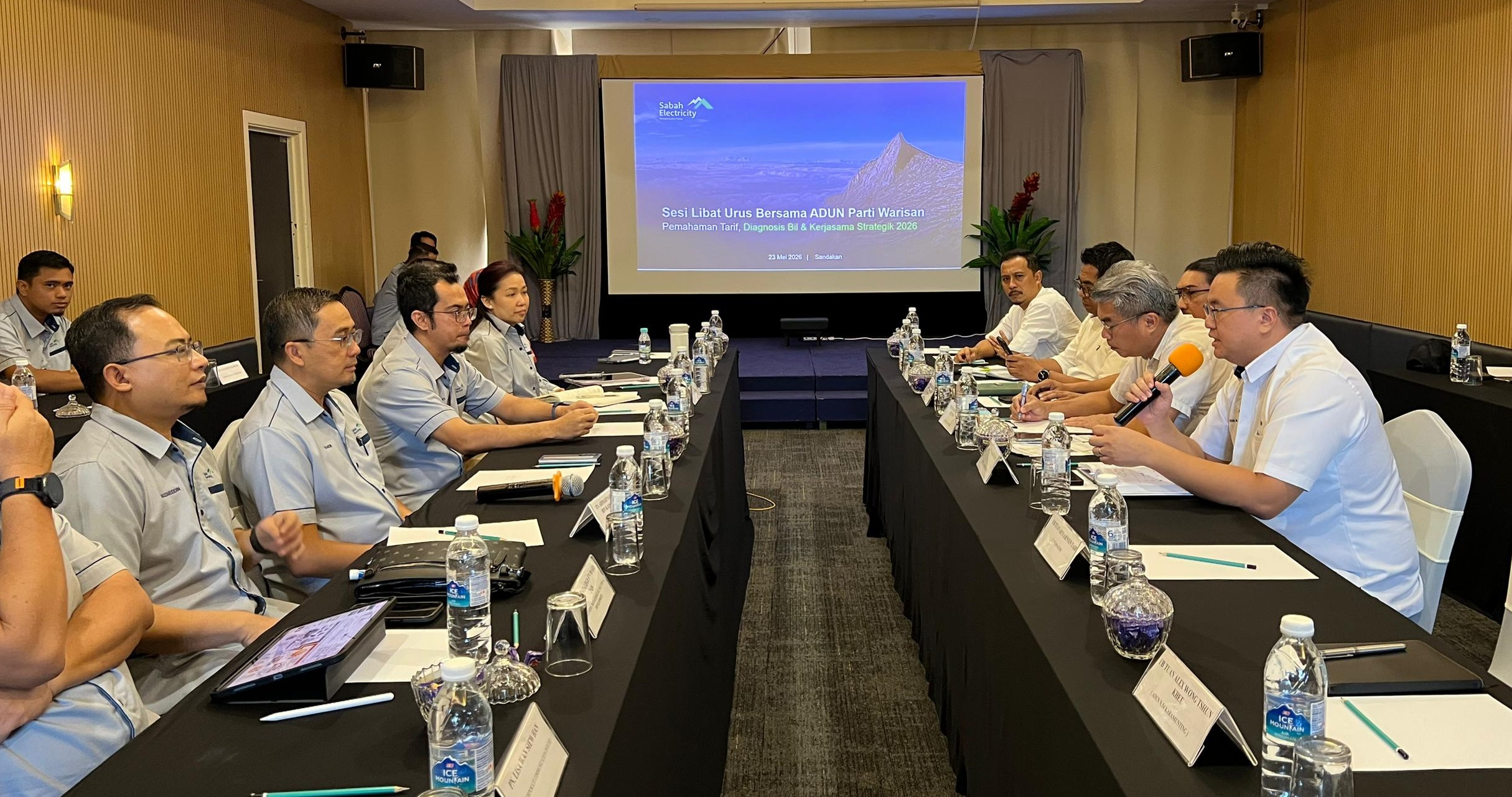
(SANDAKAN, May 23) – Tanjong Papat Assemblyman Alex Thien facilitated a dialogue session today between six Parti Warisan assemblymen and Sabah Electricity senior management, where they clearly voiced their opposition to any electricity tariff increase at this stage.
They also raised concerns over the estimated RM640 million cost of the Battery Energy Storage System (BESS) project in Lahad Datu, questioning whether the tender process had been sufficiently transparent.
During the meeting, Alex also sought updates on the progress of the Southern Link transmission project and stressed that Sabah’s future energy development should not continue relying on coal-fired power generation.
Instead, he emphasized prioritising long-term and sustainable energy solutions such as hydropower, solar energy, and other renewable sources to establish a more stable and balanced energy structure.
The six WARISAN assemblymen involved in the discussion were Tanjong Papat Assemblyman Alex Thien, Elopura Assemblyman Calvin Chong, Karamunting Assemblyman Alex Wong, Gum-Gum Assemblyman Arunarnsin bin Taib, Sekong Assemblyman Alias Haji Sani, as well as a representative of Sungai Sibuga Assemblywoman Lisa Hassan Alban.
They met face-to-face with Sabah Electricity Chief Executive Officer Datuk Ir. Ts. Mohd Yaakob Hj. Jaafar and members of the management team to discuss public concerns relating to electricity tariffs, power supply, and Sabah’s future energy development, while directly conveying grassroots feedback.
The assemblymen unanimously expressed that amid current global uncertainties, rising logistics costs and inflation have already placed considerable pressure on the public.
Any further electricity tariff increase would only worsen the financial burden on consumers. Since Sabah Electricity revised its tariff structure in February this year, it has triggered continuous public concern, with many consumers complaining about noticeably higher electricity bills.
Combined with the current hot weather conditions that are expected to increase electricity usage, they stressed that this was not an appropriate time to raise tariffs.
Alex pointed out that electricity tariffs were previously calculated across several kWh tiers, whereas the revised structure groups the first 200kWh under a single rate category.
The previous rates of 17.50 sen for the first 100kWh and 18.50 sen for the next 100kWh (101–200kWh) had been adjusted to a flat rate of 22.02 sen, representing what he described as a significant increase.
Therefore, the six assemblymen collectively urged Sabah Electricity to have discount on electricity tariffs, stressing that under current economic conditions, additional financial burdens should not be imposed on the people.
Meanwhile, regarding the BESS project in Lahad Datu, Alex questioned whether the RM640 million project cost was excessively high and called for greater openness and transparency in the contractor tender process.
On the Southern Link project, Sabah Electricity responded that Phase One, which commenced last year, is still ongoing, while Phase Two is expected to cost approximately RM1.5 billion and pending for budget.
In response, six assemblymens stated that they do not support continued reliance on coal-fired power generation, noting that while coal may appear cost-effective in the short term, its long-term competitiveness becomes questionable when fuel costs, import dependency, energy security, and environmental factors are taken into account.
Alex urged Sabah Electricity to oppose the proposed development of coal-fired power plants in Sabah.
They maintained that Sabah should prioritise long-term and sustainable energy solutions, including hydropower, solar energy, and other renewable energy sources, in order to build a more balanced and reliable energy structure.
During the session, Sabah Electricity also encouraged the public to adopt energy-saving habits and shared several electricity-saving measures.
These included setting air-conditioners between 24°C and 26°C, switching off unused electrical appliances to avoid “phantom energy consumption”, using water heaters and water pumps efficiently, and prioritising energy-efficient appliances with 4- to 5-star ratings as well as LED lighting to reduce electricity consumption and save on utility costs.
Sabah Electricity also introduced its newly launched mySE+ mobile application, highlighting functions such as bill payment, viewing bills and electricity usage, receiving outage notifications, reporting electricity issues, managing multiple accounts or households, and checking maintenance progress.
Additionally, eligible e-Kasih recipients can receive an RM40 electricity subsidy, and the public was encouraged to download and use the application.