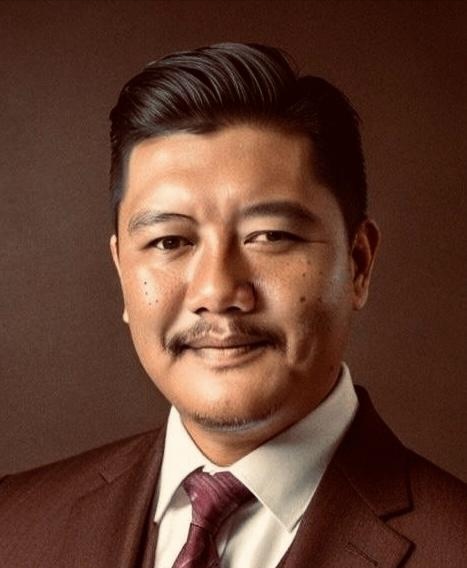
By Remy Majangkim (Majangkim Office)
KOTA KINABALU: Let us begin with the image of a prime minister who, since his first day in office, has refused to draw his salary, choosing instead to lead a cabinet that took a twenty per cent pay cut.
Anwar Ibrahim often speaks of this as a personal commitment to integrity and a rejection of the old politics of personal enrichment.
It is a powerful visual. But in the stark calculus of structural reform, symbolism has a short shelf life. For all the talk of moral high ground and reformasi, the simple truth remains: reformasi needs to eat too.
The struggle for a just and accountable Malaysia cannot be sustained on gestures of personal austerity. It demands a ruthless examination of how power is centralised, justice is compromised, and constitutional commands are ignored.
We can see these contradictions playing out in four critical arenas: a prime minister who refuses his salary while holding the nation’s purse strings; a perplexing stance on a global fugitive; a silent recalibration of the opposition; and a constitutional debt to Sabah that has been systematically evaded.
The Salary That Isn’t Taken, The Power That Isn’t Shared.
Anwar has repeatedly declared that he does not take a salary, only his MP allowance, describing it as an example that “not all leaders seek personal wealth”.
Over three years, he says, that adds up to millions of ringgit forgone. He is not wrong to make the gesture.
But the gesture masks a far more troubling concentration of authority. Anwar also holds the finance ministry portfolio.
The man who authorises hundreds of billions in federal spending presents himself as an ascetic—but the public may begin to wonder: if he will not take a salary, will he also yield the political authority that comes with holding both offices?
The opposition has already called for a bar on the prime minister holding the finance portfolio, arguing that this separation is more important than term limits. They are right.
Reformasi was supposed to be about dismantling old systems of patronage and control.
Merging the country’s two most powerful offices is a step in the opposite direction. The refusal of a pay cheque seems less significant when one holds a veto over the entire national treasury.
The Jho Low “Non‑Issue”: A Betrayal of Justice
If the salary issue is about internal concentration of power, the government’s handling of Jho Low’s pardon bid reveals a troubling passivity.
On 15 May 2026, Anwar declared that Malaysia would not oppose Jho Low’s reported application for a pardon from US President Donald Trump. “We are not supporting that route. But of course, it’s the United States; their own business,” he told reporters. He described the matter as a “non-issue”.
When asked whether Malaysia would formally oppose the move, his answer was blunt: “No.” It’s a US decision.”
This is a curious stance for an administration built on an anti-corruption platform. The 1MDB saga is the reason Reformasi gained much of its moral authority.
To treat the potential exoneration of the scandal’s central figure as a “non‑issue” risks alienating the very base that believes in uncompromising justice. Investment, Trade and Industry Minister Johari Abdul Ghani had the courage to say Low should not be pardoned. The Prime Minister, by contrast, looked away.
Justice is not a matter of diplomatic convenience. If the government will not even formally object to a pardon for the man who symbolises Malaysia’s greatest financial crime, what does Reformasi actually stand for?
The Rafizi‑MUDA Marriage: Reformasi’s Family Feud
While the government navigates external controversies, a more subtle but equally significant realignment is taking place at home. Muda and former PKR deputy president Rafizi Ramli are in talks to join forces. Political analysts tracking the talks note that Johor’s state election, due in April 2027, will be the logical testing ground.
This potential alliance is a direct indictment of the administration’s ability to manage its own coalition. Rafizi, once Anwar’s most effective strategist, has already received a show‑cause letter from PKR after declaring that he would contest the next general election on a non‑PKR ticket. His response was characteristically sharp:
“They claim I declared I am leaving the party when I said I would contest in GE16 but not on a PKR ticket. ” That plan would only take place once Parliament were dissolved.”
If Muda and Rafizi successfully forge a “third force” that appeals to disillusioned urban and reform‑minded voters, it could bleed support from Pakatan Harapan.
Reformasi cannot afford to lose its own children. But when a strategist of Rafizi’s calibre is exploring paths that directly compete with the government he helped form, the message is clear: the idealism of 2018 has given way to a more fractured and pragmatic landscape. If Reformasi cannot feed its own strategists, it should not be surprised when they open their own kitchen.
The Sabah 40% Entitlement: A Constitutional Command, Not a Negotiation
And then there is Sabah.
On 17 October 2025, the Kota Kinabalu High Court ruled that the federal government had acted unlawfully by failing to fulfil Sabah’s constitutional right to 40% of federal revenue derived from the state between 1974 and 2021. The judgement was not ambiguous. It declared an unlawful failure to perform a constitutional duty.
Yet the administration’s response has been a masterclass in evasion. The Court of Appeal granted a stay of the High Court order, allowing the federal government more time to negotiate, calculate and pay.
The government insists it is committed to honouring the 40% principle. Minister in the Prime Minister’s Department Mustapha Sakmud has stressed that the entitlement “is a right enshrined in the Federal Constitution, not a form of goodwill”.
But the numbers tell a different story. Sabah Finance Minister Masidi Manjun has stated that taxes collected in Sabah totalled RM7.547 billion in 2025, and the state calculates that 40% of that—RM3.019 billion—is due to Sabah for just that single year. Instead, Sabah receives interim special grants and increased allocations, not the 40% the Constitution commands. A forum in Kota Kinabalu pointed out that the RM600 million special grant for 2026 is approximately three per cent of what Sabah should receive under the constitutional formula.
Three percent.
On the ground in Sabah, patience has run dry. On 10 April 2026, news outlets reported that around 300 people gathered at Padang Merdeka in Kota Kinabalu, representing 19 NGOs and political groups, demanding that the federal government honour the 40% entitlement. A Sabah rights activist, Datuk Roger Chin, put it bluntly: there should be “no more excuses in returning Sabah’s 40 per cent entitlement, at least for payments from 2022 onwards”.
And here is the simple truth that all the legal jargon and negotiation committees cannot obscure: even a blind person can see that Putrajaya is stalling.
The Constitution commands 40%. It does not ask about affordability. It does not ask about phased implementation. It commands compliance.
Anwar has found billions for subsidies, for development projects, and for political priorities across the peninsula. He has arranged budgets running into the hundreds of billions. And yet, when the conversation turns to Sabah’s constitutional entitlement, the language shifts from “shall” to “we are studying” and from “command” to “we have increased allocations significantly.”
That is not governance. That is bamboozlement—using the complexity of federal budgets to obscure a fundamental breach of a sworn duty.
Every cabinet member took an oath to “preserve, protect and defend the Constitution”.
That oath does not contain a clause that says “except when the bill is too high”. The prime minister who refuses his own salary to signal integrity yet finds every creative accounting method to avoid paying what the Constitution demands reveals the deepest contradiction of all. One act is personal sacrifice. The other is constitutional evasion. They are not the same. One builds trust in the man. The other erodes trust in the office, the oath, and the very idea that ‘Reformasi’ means anything more than rearranging the furniture while leaving the foundations cracked.
Conclusion
Anwar Ibrahim’s leadership stands at a crossroads. His decision to forgo a salary is a noble gesture, yet it can no longer obscure the uncomfortable concentration of power in his two offices. His administration’s lukewarm response to Jho Low’s pardon bid risks ceding the moral high ground on the very issue that brought the old order down.
The potential alliance between Rafizi and Muda threatens to fracture the Reformasi base from within. And the Sabah 40% revenue claim is not a dispute over quantum; it is a test of whether the federation is governed by law or by the convenience of those in power.
A prime minister who refuses a salary but cannot obey the constitution. A government that claims to fight corruption but will not oppose a pardon for its most famous fugitive. A reform movement that cannot hold its coalition together or honour its own founding ideals.
Reformasi needs to eat. But more than that, it needs to mean something. Until constitutional debts are paid as commanded, justice is pursued without compromise, political dissent is respected, and concentrated power is loosened, the promise of Reformasi will remain unfulfilled. And when that day comes, even the blind will not need to see—because there will be nothing left to see.