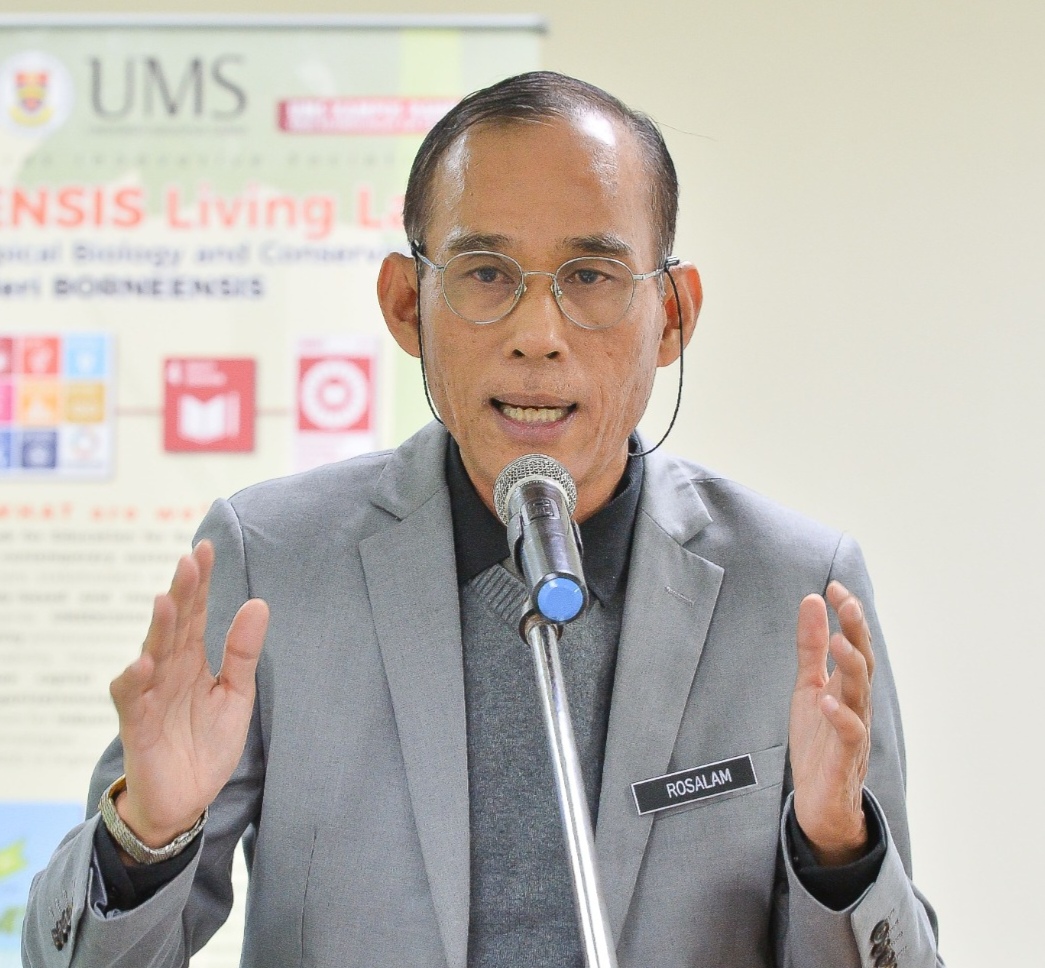
By Prof. Ir. Dr. Rosalam Hj. Sarbatly,Deputy Vice Chancellor, Research & Innovation,Universiti Malaysia Sabah (UMS)
KOTA BELUD: The district is emerging as a strategic location in Sabah’s next phase of industrial development, with the potential to play a defining role in shaping a more value-driven state economy.
As Malaysia continues to strengthen high-technology industries such as electronics and semiconductors in regions like Penang and Johor, Sabah’s strength lies in its agriculture, marine resources and rich tropical biodiversity.
These are not constraints, but strategic assets. The opportunity now is not simply to increase production, but to capture greater value from what Sabah already has. The window to capture this value, however, will depend on how quickly Sabah can move beyond raw production.Sabah’s economic base is already supported by key sectors.
The oil and gas industry anchors high-value industrial activity in Sipitang, Kimanis and Labuan, while tourism continues to grow on the strength of Sabah’s biodiversity, natural landscapes and cultural heritage. These sectors provide stability. The next step is to deepen value creation within resource-based industries—reflecting a broader global shift towards value-based and resource-driven industrial development.
The State Government’s initiative, led by the Ministry of Industrial Development and Entrepreneurship, to develop the Kota Belud Industrial Park (KBIP) is therefore timely and forward-looking, in line with ongoing development priorities under the current Malaysia Plan. Sabah already operates a network of industrial parks across the state, and the expansion into new locations such as Kota Belud signals a continued commitment to strengthening industrial capacity.
The key question, however, is not just where to build, but how to position KBIP for long-term impact.A practical approach is to give KBIP a clear focus from the outset, beginning with a pilot agro-marine industrial cluster centred on high-value aquaculture and food processing.
This would involve integrated production systems, processing facilities and cold chain infrastructure to ensure that products are not only produced, but processed and delivered to market at required standards.
This creates a clear pathway for early-stage investment anchored on real market demand.Such a phased approach is realistic and scalable. It allows early commercial validation, reduces investment risk and ensures development is guided by actual market demand rather than speculation.At the same time, several fundamentals must be addressed early.
These include securing strong market linkages with anchor buyers, ensuring consistent quality and volume from producers, strengthening logistics and cold chain systems, and building technical capabilities for industrial-scale operations.Within Sabah’s broader industrial ecosystem, KBIP is well positioned to play a complementary role.
The Kota Kinabalu Industrial Park (KKIP) anchors manufacturing activities and has attracted substantial industrial investment over the years, while the Palm Oil Industrial Clusters (POIC) in Sandakan and Lahad Datu drive downstream development in the palm oil sector.
Together with the state’s energy hubs, these form a strong industrial base.KBIP can build on this foundation by focusing on agro-marine industries—particularly premium seafood, marine-based products and halal-certified food.
This can be further expanded into high-value bio-based products derived from Sabah’s tropical biodiversity, including herbal extracts, plant-based compounds and natural health ingredients.
These resources, when properly processed and standardised, have strong potential for use in nutraceutical, pharmaceutical and wellness industries.These are established global markets with growing demand. The seafood sector continues to expand, while marine-derived and plant-based bioactive products are increasingly used in health and wellness applications.
At the same time, the global halal food market—valued at over USD2 trillion—offers consistent demand across ASEAN and the Middle East for high-quality, value-added products.Sabah is well placed to respond. It is among Malaysia’s leading aquaculture producers, contributing significantly to the national seafood supply, and has strong potential in areas such as seaweed cultivation.
However, much of this production remains at the raw or minimally processed stage.The next step is clear—Sabah must move decisively from resource extraction to value creation.Instead of exporting raw products, Sabah can produce and export higher-value processed goods.
This is where long-term economic value, resilience and competitiveness will be built.To support this transition, enabling infrastructure is critical. Reliable energy and water supply are essential for industrial stability, while strong transport connectivity—including road networks and access to ports and airports—ensures efficient movement of goods.Equally important is digital infrastructure.
As industries adopt Industry 4.0 technologies such as automation, real-time monitoring and smart production systems, digital connectivity becomes essential to ensure efficiency, consistency and compliance with international standards.Local communities must also be part of this transformation.
Through structured cooperatives and industry-linked production models, communities can participate in the value chain while maintaining quality and scalability.Universiti Malaysia Sabah (UMS) is well positioned to support this effort.
Through its expertise in aquaculture systems, bio-processing and applied research, UMS can contribute to feasibility studies, technology deployment and engagement with investors and buyers. It can also facilitate linkages with regional and international markets, including ASEAN, China and the Middle East.Ultimately, the development of KBIP is not about competing with other industrial centres in Malaysia, but about complementing them.
Each region must build on its strengths.What is needed now is not a new idea, but disciplined execution of a clear direction.Kota Belud is not just where this can happen—it is where Sabah’s next phase of value creation can begin.