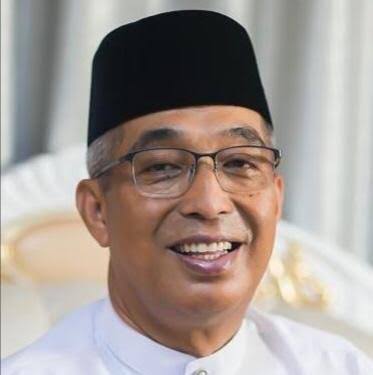
KOTA KINABALU: Former Communications and Multimedia Minister Datuk Seri Dr Salleh Said Keruak has expressed his support for the federal government’s decision to maintain diesel subsidies in East Malaysia, even in light of increasing oil prices.
This decision has been labeled as unjust by the opposition towards West Malaysians.
“Without proper context, it creates a misleading perception,” he said in his Facebook post.
In defending the move, Salleh emphasised that Malaysia was established in 1963 as a partnership, insisting that Sabah and Sarawak are not just ordinary states.
“Their status is acknowledged under MA63 and the Federal Constitution, and policies should mirror this foundational principle.
“Expenses in Sabah and Sarawak are inherently higher due to structural factors. Logistics rely on long-distance transportation, which includes both roads and maritime routes. The complexity and cost of supply chains are particularly pronounced in rural regions,” he stated.
The former Chief Minister of Sabah pointed out that geography exacerbates the situation, as vast areas, dispersed populations, and inadequate infrastructure elevate distribution expenses.
“Any increase in fuel prices is swiftly felt by consumers,” he added.
Simultaneously, Salleh highlighted that Sabah and Sarawak play a crucial role in contributing to the nation’s natural resources, and this contribution must be acknowledged in national policy.
“Thus, subsidies are not a luxury, but an essential tool for balancing these structural disparities.
“The core issue lies in perception. Without a clear explanation, differences in policy can be easily misinterpreted or even politicized.
“Equity is not about uniform treatment for all. It involves recognizing the diverse realities, histories, and roles within the Federation,” he added.
In the defending the move, Salleh said Malaysia was formed in 1963 as a partnership, asserting that Sabah and Sarawak are not ordinary states.
“Their position is recognised under MA63 and the Federal Constitution, and policies should reflect this foundation.
“Costs in Sabah and Sarawak are structurally higher. Logistics depend on long-distance transport, including roads and sea routes. Supply chains are more complex and expensive, especially in rural areas,” he said.
The former Sabah Chief Minister said Geography adds to the challenge where arge areas, scattered populations, and limited infrastructure increase distribution costs.
“Any rise in fuel costs is quickly felt by consumers,” he added.
At the same time, Salleh said Sabah and Sarawak contribute significantly to the country’s natural resources, and this must be recognised in national policy.
“Subsidies are therefore not a privilege, but a necessary balancing tool to manage these structural differences.
“The real issue is perception. Without clear explanation, policy differences are easily misunderstood or even politicised.
“Fairness is not about treating everyone the same. It is about recognising different realities, history, and roles within the Federation,” he said.