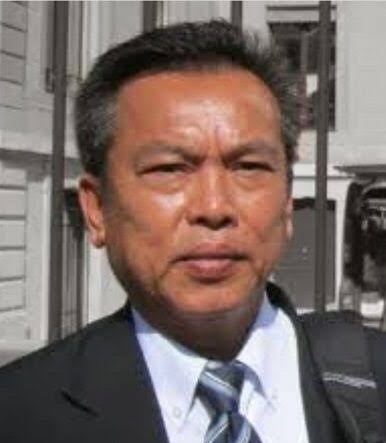
By Daniel John Jambun President Borneo’s Plight in Malaysia Foundation (BoPiMaFo)
KOTA KINABALU: Borneo’s Plight in Malaysia Foundation (BoPiMaFo) expresses grave concern over the recent legal manoeuvres by the Federal Government to delay the implementation of Sabah’s constitutional entitlement to 40% of the net revenue derived from the state.
This entitlement is not a political concession. It is a constitutional right enshrined under Articles 112C and 112D of the Federal Constitution of Malaysia.
On 17 October 2025, the Kota Kinabalu High Court delivered a historic ruling in the judicial review initiated by the Sabah Law Society. The Court did not merely issue a declaration. It granted a mandamus order compelling the Federal Government to perform its long-neglected constitutional duty.
The Court further recognised that the constitutional review mechanism required under Article 112D had effectively been ignored for decades. In other words, the Court acknowledged that Sabah’s constitutional financial safeguards had not been properly implemented for more than half a century.
The High Court directed that a joint review with the Sabah Government be conducted within 90 days and that agreement be reached within 180 days — a clear recognition that the constitutional mechanism to review Sabah’s special grant had been neglected for generations.
Instead of complying with the spirit of the judgment, the Federal Government has chosen to pursue legal manoeuvres, including an application for a stay of the order. This development sends a troubling message to the people of Sabah.
For more than fifty years, the constitutional safeguards designed to protect Sabah’s financial autonomy have not been properly implemented. The High Court decision represented a long-overdue attempt to restore constitutional compliance.
Yet today, Sabahans are witnessing a familiar pattern: public assurances of commitment, but delay and resistance in legal proceedings.
Let us be clear.
The 40% entitlement is not charity from Putrajaya.
It is not a goodwill payment.
It is not a discretionary grant.
It is a constitutional obligation owed to Sabah since the formation of Malaysia in 1963 under the Malaysia Agreement 1963.
The issue before the nation is therefore not whether Sabah deserves this entitlement.
The real question is whether the Federal Government is prepared to honour the Constitution.
The people of Sabah must also understand the enormous implications of this issue. Federal revenue derived from Sabah includes major sources such as petroleum income, taxation, customs revenue and other federal collections generated within the state.
If the constitutional formula is properly implemented, Sabah’s entitlement could amount to many billions of ringgit annually.
If this constitutional formula had been properly implemented since the 1970s, Sabah’s development trajectory could have been fundamentally different.
Schools, hospitals, roads and basic infrastructure across the state could have been financed through Sabah’s own constitutional revenue share.
Instead, Sabah remains one of the poorest regions in Malaysia despite being one of the richest in natural resources.
This reality raises a fundamental question that Sabahans must confront: how can a land so rich remain a people so poor?
For the indigenous communities of Sabah — particularly the MOMOGUN peoples who have lived on this land for generations — this issue carries even deeper meaning. The wealth generated from Sabah’s resources should have helped uplift rural communities, improve village infrastructure, strengthen native customary land protection, and provide better opportunities for the next generation.
When Sabah’s constitutional revenue rights are denied or delayed, it is these communities in the interior and rural districts who bear the greatest cost.
Sabah’s constitutional rights are therefore not an abstract legal issue — they are directly tied to the dignity, development and future of the people who call this land their ancestral home.
This case therefore carries implications far beyond Sabah.
If a clear constitutional provision can be ignored for decades and a High Court order delayed through procedural manoeuvres, it raises serious concerns about the integrity of constitutional governance in Malaysia.
The rule of law cannot survive if constitutional obligations are treated as optional.
BoPiMaFo therefore calls on the Sabah Government to stand firm in defending the constitutional rights of the state. Sabah must not be pressured into accepting a rushed or undervalued settlement simply to meet political timelines.
Any agreement reached must be subjected to full public scrutiny and transparency. The people of Sabah deserve to know the basis upon which their constitutional entitlement is calculated.
Any settlement that falls substantially below the constitutional formula would raise serious questions about whether Sabah’s rights have been properly defended.
A weak agreement today could lock Sabah into an unjust formula for generations.
If this constitutional entitlement is worth defending — and it is — then it must be defended fully, transparently, and without compromise.
This struggle is not merely about money.
It is about the integrity of the constitutional arrangements upon which Malaysia itself was formed.
The people of Sabah must now ask themselves a simple question: if a constitutional right clearly written in the Federal Constitution can remain unfulfilled for more than fifty years, what does that say about the place of Sabah within the federation?
This moment should serve as a wake-up call.
The future of Sabah cannot depend on promises that change with political convenience. It must be anchored in the firm enforcement of constitutional guarantees that were agreed upon when Malaysia was formed.
Sabah is not asking for charity.
Sabah is not negotiating for favours.
Sabah is demanding the enforcement of the Constitution of Malaysia.
The people of Sabah have waited more than fifty years.
Justice delayed for half a century must not now become justice denied.