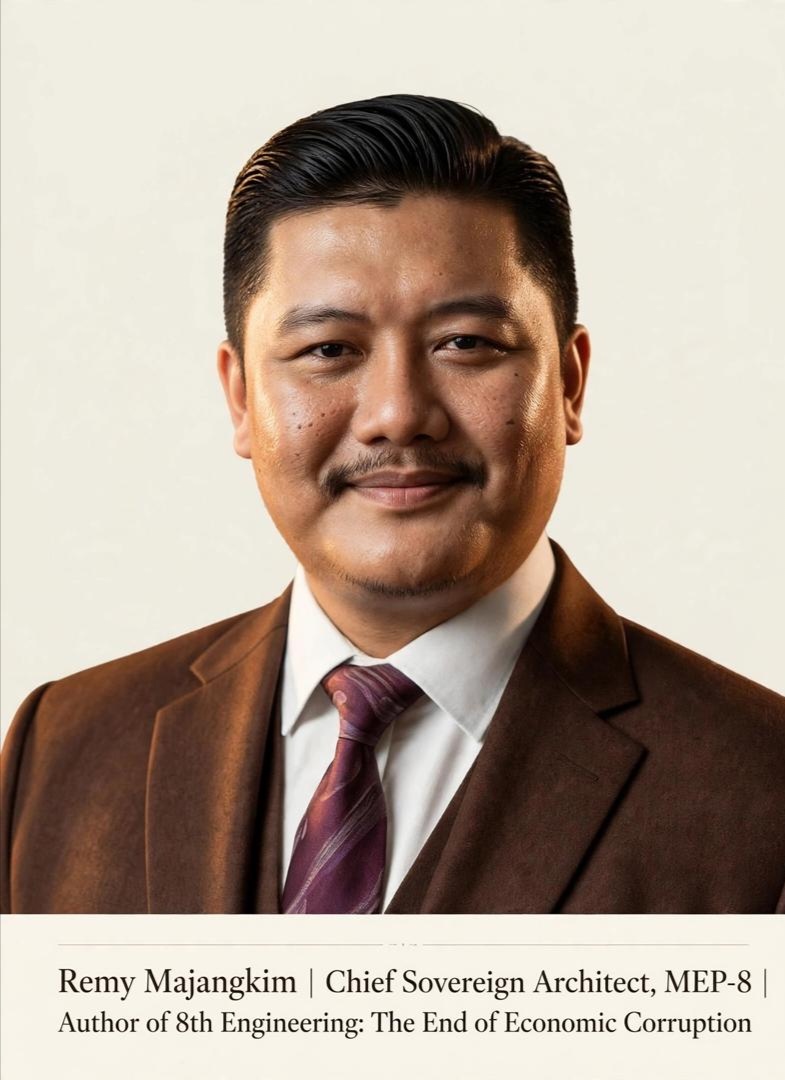
By Remy Majangkim
On November 27, 2026, Kota Kinabalu High Court Judge Datuk Alexander Siew How Wai gave the Sabah Attorney General’s Chambers three days to clearly state its legal position in a landmark lawsuit over Sabah’s continental shelf and territorial waters.
Dismissing the state’s previous claim of being merely more aligned with the plaintiffs, the judge asked whether that meant fifty one percent or halfway aligned.
That sharp judicial rebuke has stripped away years of political ambiguity.
In political science terms, what is unfolding in the Kota Kinabalu High Court is a classic collision between domestic political survival, intergovernmental diplomacy, and the hard realities of constitutional law.
With the 16th General Election (GE16) looming on the horizon, Sabah’s leadership can no longer afford to hedge between Putrajaya’s administrative promises and the constitutional rights of Sabahans.
Founding Partner, Not a Subordinate State
To understand why this case carries such immense weight, we must start with a fundamental truth that is often blurred in federal politics: Sabah is not merely one of the states of Malaysia. Sabah is an equal founding partner of the Federation.
Political scientists distinguish between unitary states that delegate power downward and coming together federations formed by treaty among distinct territories.
Under the Malaysia Agreement 1963 (MA63), North Borneo (Sabah), Sarawak, Singapore, and the Federation of Malaya pooled their sovereignty as equal partners to create Malaysia.
Although a 1976 amendment to Article 1(2) of the Federal Constitution temporarily grouped Sabah and Sarawak alongside the eleven Malayan states, Parliament’s unanimous 2021 amendment restored the original 1963 wording, reaffirming Sabah’s status as a distinct constituent territory.
Because Sabah entered Malaysia with its own sovereign boundaries intact under the North Borneo Orders in Council of 1954 and 1958, federal statutes cannot unilaterally redraw Sabah’s coastline or seabed.
As Lord President Tun Mohamed Suffian famously ruled in Ah Thian v Government of Malaysia, Parliament in Malaysia is not supreme; it is strictly bound by the written Constitution.
Read together with Article 2, which requires State Legislative Assembly consent to alter state boundaries, and Article 161E, which grants Sabah’s Head of State a constitutional veto over amendments affecting Borneo safeguards, Putrajaya’s peacetime authority stops at Sabah’s pre 1963 borders.
Forty Two Years of Emergency Freeze
If the Constitution protected Sabah’s twelve nautical mile territorial sea and continental shelf, how did Putrajaya take control of Sabah’s offshore oil and seabed wealth?
The empirical paper trail points to forty two years of emergency rule followed by statutory sleight of hand.
When Parliament passed the Continental Shelf Act 1966 and the Petroleum Mining Act 1966, neither law applied to Sabah or Sarawak.
However, following the May 13, 1969 riots in Kuala Lumpur, events completely unrelated to Sabah, Putrajaya invoked Article 150 of the Federal Constitution.
Using absolute emergency powers shielded from court challenges, the federal government issued Emergency (Essential Powers) Ordinance No. 7 of 1969, extending federal petroleum laws to Borneo while restricting Sabah’s territorial waters to just three nautical miles.
For forty two years, the shared prosperity promised under MA63 remained frozen under emergency decree.
When Prime Minister Datuk Seri Najib Razak moved to annul the 1969 Proclamation of Emergency in late 2011, Article 150(7) triggered a six month countdown.
All emergency ordinances, including the three nautical mile cap, were set to expire in June 2012, which would have automatically restored Sabah’s twelve nautical mile territorial waters and continental shelf jurisdiction.
To prevent that reversion, Putrajaya rushed through the Territorial Sea Act 2012 just before the deadline expired.
A side by side reading of the statutes shows that Section 3(3) of the peacetime 2012 Act was copied nearly word for word from Section 4(2) of the 1969 Emergency Ordinance.
In political science, this is known as institutional path dependency: a temporary security decree used to centralize resource control was converted into permanent peacetime law without the constitutional consent required of a founding partner.
An Awkward Contradiction in Sabah’s Own Law
The Sabah Attorney General’s hesitation in court is made even more striking by Sabah’s own statute book.
In November 2018, the Warisan led state government amended Section 4(g) of the Sabah Land Ordinance (Cap. 68) to explicitly define land, an exclusive state matter under the Federal Constitution, as including Sabah’s continental shelf under the 1954 Order in Council.
This creates an undeniable contradiction. Sabah’s own domestic law already declares the continental shelf to be Sabah land, yet the state’s legal team hesitated to fully back the Sabah Action Body Advocating Rights (Sabar) in its bid to invalidate conflicting federal laws.
Meanwhile, the gap between Sabah and Sarawak continues to widen. In February 2026, the Sarawak government directly petitioned the Federal Court to challenge federal petroleum and shelf laws from the front lines.
Following the Federal Court’s August 2026 ruling barring Sabar from intervening in Sarawak’s petition, Sabah was left to fight its own constitutional battle in Kota Kinabalu.
Unlike Sarawak, where the state government leads the charge, Sabah’s biggest legal breakthroughs, from the Sabah Law Society’s October 2025 High Court victory on the forty percent net revenue entitlement to Sabar’s continental shelf suit, have been driven by civil society rather than elected officials.
The Road to GE16: Numbers Do Not Lie
In political science, leaders often play a two level game, speaking bold nationalist rhetoric to voters at home while practicing cautious diplomacy with federal allies in Putrajaya.
However, electoral data from the November 29, 2025 Sabah state election proves that this balancing act has reached its expiration date.
Across Sabah’s seventy three state constituencies in November 2025, local parties captured over eighty percent of the seats. Gabungan Rakyat Sabah (GRS) won twenty nine seats with 25.37 percent of the vote, while Warisan surged to twenty five seats and won the overall popular vote at 25.57 percent.
Conversely, Malayan based coalitions suffered historic defeats, with Barisan Nasional dropping to six seats and Pakatan Harapan falling to a single seat.
Most tellingly, the Democratic Action Party (DAP) was completely wiped out, losing all eight seats it contested, including longtime urban strongholds, after voters punished the party for its careless missteps and perceived hesitation over Putrajaya’s handling of MA63 and Sabah’s forty percent revenue entitlement.
DAP’s electoral collapse spells an unmistakable warning to every other Malayan based party operating in Borneo: honor our constitutional rights as a founding partner, or prepare to be wiped out at the ballot box.
Governing without an outright single party majority and facing a resurgent Warisan, the current Sabah administration has zero room for perceived weakness on MA63.
Looking ahead to GE16, Sabah commands twenty five of the 222 seats in the Dewan Rakyat. In an era of hung parliaments where no single coalition commands an easy national majority, Sabah’s twenty five parliamentary seats are indispensable to forming the federal government in Putrajaya.
Conclusion
Justice Alexander Siew’s three day deadline has forced a moment of truth.
The maritime territory at stake covers an offshore expanse larger than Sabah’s entire landmass, holding vital energy resources and future economic security for generations of Sabahans.
Today, three powerful forces have converged. Constitutional law demands an honest answer on whether an ordinary peacetime statute can keep an expired emergency decree alive.
The people of Sabah have shown at the ballot box that defending MA63 matters more than federal coalition convenience. And GE16 approaches with East Malaysia holding the national balance of power.
When the Sabah Attorney General files the state’s clarified affidavit, it will tell voters whether Sabah’s leaders are ready to stand with the full constitutional authority of a founding partner of Malaysia.