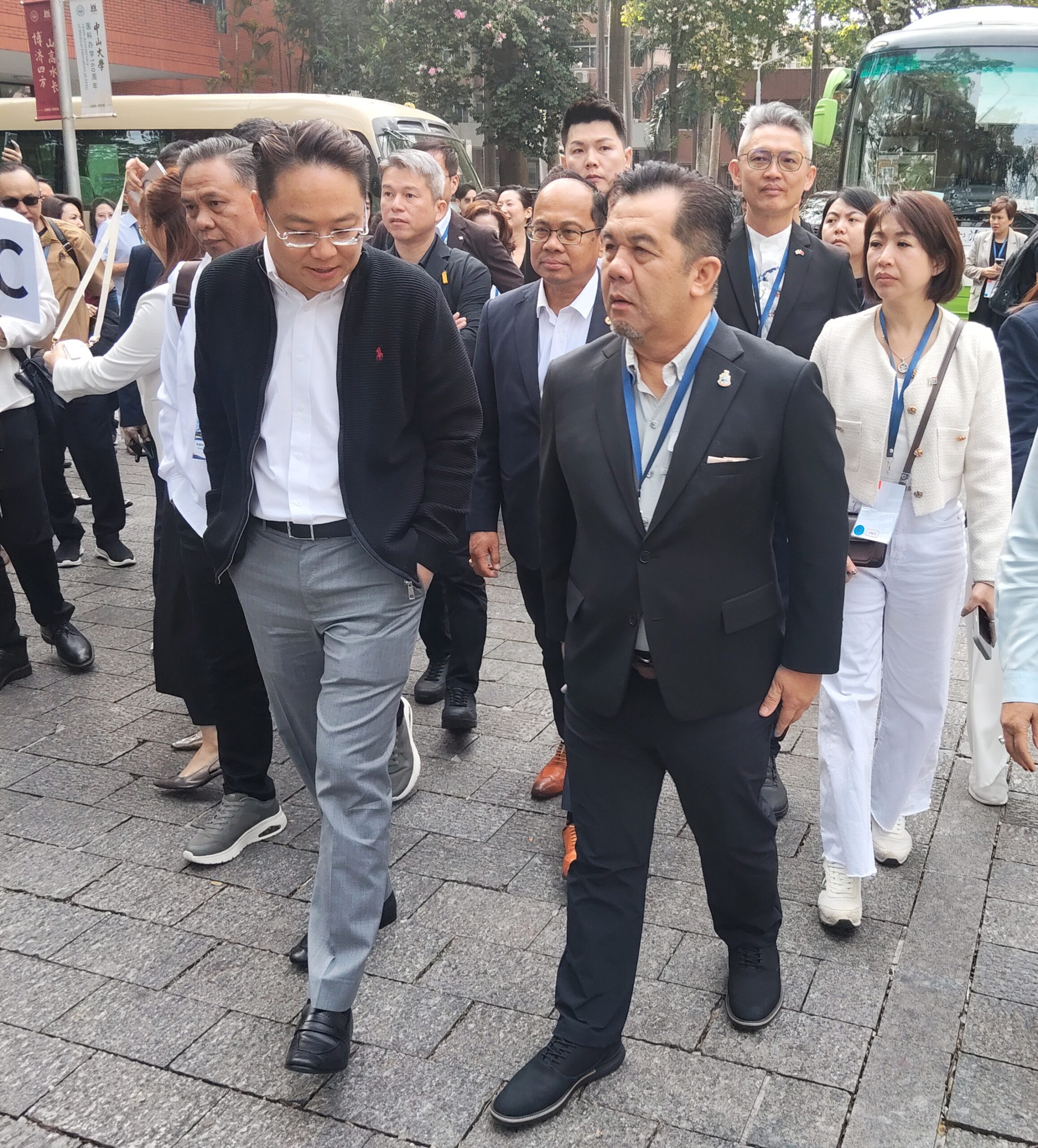
(GUANGZHOU: The delegation from the Malaysia-China Chamber of Commerce (MCCC) Sabah visited Sun Yat-sen University in Guangzhou during its high-level exchange programme in China, engaging with university faculty members and students to explore the application of artificial intelligence (AI) in agriculture and fisheries, as well as potential collaboration in youth empowerment, education and the blue economy.
MCCC Sabah President Datuk Dexter Lau said AI could serve as a starting point for deeper Malaysia-China collaboration, but cooperation should not be confined to AI and technological development. Instead, both sides should leverage their respective expertise, technological strengths and practical experience to explore broader opportunities in education, talent development, industrial advancement and other areas that could bring tangible benefits to Sabah.
He said the visit to Sun Yat-sen University had provided the delegation with an opportunity to gain insights into China’s achievements in AI and agricultural technology, while creating opportunities to establish broader exchanges and cooperation between the two sides.
“I believe what we have learned about AI today is just a starting point. Through this visit, I can see that there are many more areas in which we can collaborate, beyond AI and technological development, including education, talent development and other fields that could contribute to Sabah’s progress.”
Datuk Dexter said he had held discussions with university leaders and Sabah Minister of Agriculture, Fisheries and Food Industry Datuk Jamawi Ja’afar, and expressed his appreciation to the university’s leadership and representatives for their participation in exploring potential areas of future cooperation.
He noted that Sabah possessed abundant resources and development potential, adding that combining these strengths with China’s experience in technology, education and industrial development would help advance various sectors in the state while creating more learning, growth and development opportunities for Sabah’s younger generation.
“We can leverage our collective knowledge and experience to promote cooperation in education, talent development, technological solutions and enhancing the value of our existing industries.
“I am very pleased, as President of the Malaysia-China Chamber of Commerce, to be able to facilitate such cooperation and bring greater value to the people of Sabah.”
Meanwhile, Datuk Jamawi said that apart from its renowned Faculty of Medicine, Sun Yat-sen University also had a strong agricultural faculty that had contributed significantly to the development of Guangzhou and surrounding areas, particularly in agricultural technological innovation and research applications.
He said the delegation had gained valuable insights into how the university utilised AI to advance agricultural technology research and development, adding that its experience offered important lessons for Sabah.
He revealed that although Sabah had begun exploring AI applications at the departmental level, its overall development was not yet as comprehensive as that of relevant institutions in China.
As such, he had discussed with university representatives the proposal to send government officers involved in AI-related work, as well as lecturers from the Institut Pertanian Sabah, to Sun Yat-sen University for training.
**Jamawi Proposes Sending Sabah Officials and Lecturers to Sun Yat-sen University for AI Training to Advance Agricultural Technology**
He stressed that learning AI should go beyond reading materials or watching YouTube tutorials. More importantly, structured and professional training would enable participants to acquire practical skills and obtain recognised qualifications or certifications.
Datuk Jamawi also expressed hope that Sabah could combine the expertise of academics from local technical universities with Sun Yat-sen University’s capabilities to gradually establish a more comprehensive AI application framework, integrating AI into the development of the state’s agriculture, food industry and related sectors.
During the visit, Sun Yat-sen University Deputy Director of the Office of International Cooperation and Exchange, Yu Zhantao, delivered a welcoming address.
Professor Shi Qian from the School of Geography and Planning at Sun Yat-sen University subsequently conducted a special lecture on **”AI Applications in Agriculture and Fisheries and Future Collaboration”**, highlighting the potential applications of AI in these sectors and opportunities for future cooperation.
The visit not only provided the Sabah delegation with a deeper understanding of China’s agricultural technology development and emerging trends, but also served as a platform to strengthen Malaysia-China cooperation in education, technology and industrial development.