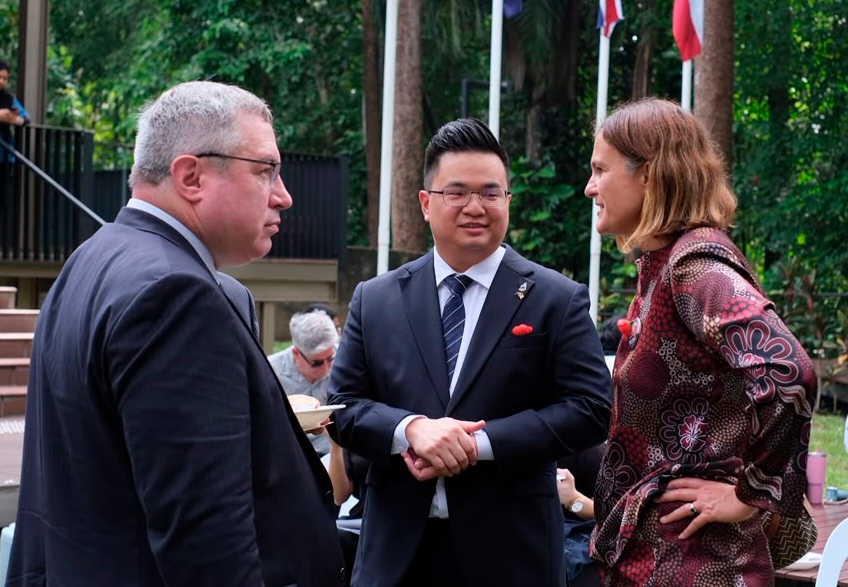
SANDAKAN: With Malaysia’s overall international security assessment continuing to improve and confidence in the security environment along Sabah’s east coast gradually recovering, Tanjong Papat Assemblyman Alex Thien Ching Qiang believes Sabah should seize the opportunity to strengthen its international tourism promotion and showcase the east coast’s rich tourism resources to the world.
Thien said Sabah should use the improving security environment as an opportunity to encourage more international visitors to rediscover the east coast, which is home to world-class natural ecosystems, wildlife and marine attractions.
He said this during the Sandakan Day commemorative event, where he engaged with diplomatic representatives from several countries and shared views on Sabah’s developments in maritime security, tourism and its international image.
Among those he met were Australian High Commissioner to Malaysia Danielle Heinecke, New Zealand Deputy High Commissioner to Malaysia Julian Tollesttrup, and United States Chargé d’Affaires David “Chip” Gamble.
Thien said relevant security agencies have continued to strengthen security monitoring and enforcement capabilities along Sabah’s east coast, particularly in areas previously affected by kidnapping and ransom incidents.
“Maritime patrols, surveillance and border security measures have been strengthened over the years, and this has contributed to the gradual improvement of the overall security situation along the east coast,” he said.
He stressed that as the security environment improves, Sabah must also take a more proactive approach in showcasing the east coast’s tourism potential to the international community.
“We have to show the world what the east coast of Sabah really has to offer — a destination worth visiting, with some of the most remarkable natural attractions in the region,” he said.
Thien said Sabah possesses an exceptionally diverse range of tourism assets, including world-class diving destinations, tropical rainforests, wildlife, river-based ecotourism, islands and beautiful beaches.
“We have a very complete ecotourism ecosystem. From rainforests and wildlife to rivers, islands and marine attractions, the east coast has tremendous potential in the international tourism market,” he said.
He highlighted Sandakan and its surrounding areas as important gateways to Sabah’s rainforest and wildlife attractions, including the world-renowned Kinabatangan River ecosystem and Sukau river tourism area, as well as the rich biodiversity of Borneo.
At the same time, he said the east coast’s coastal areas and islands offer significant potential for international diving, marine ecotourism and beach tourism.
“We should not only tell international visitors that Sabah is safe. We should also tell them why Sabah is worth visiting,” he said.
Thien said Sabah’s unique natural assets are a major competitive advantage in the international tourism market, while Sandakan has the potential to position itself as an important gateway connecting rainforest, wildlife, marine and ecotourism experiences.
“We should combine security improvements with tourism promotion. When the international community sees that our security environment has improved and, at the same time, sees the world-class natural attractions we have here, confidence in Sabah will naturally continue to grow,” he said.
He also welcomed the continued visits by foreign diplomatic representatives and international friends to Sabah, saying that firsthand visits and exchanges would allow them to better understand Sabah’s current social, security and tourism environment.
Thien said the continued arrival of foreign representatives and international tourists would not only strengthen Sabah’s international image, but also generate wider economic benefits for the tourism, hotel, food and beverage, transportation and local community sectors.
He stressed, however, that security efforts must not be relaxed.
“The government must continue to maintain maritime surveillance, border enforcement and security deployments. While consolidating the security achievements we have made, we must also turn the east coast’s tourism potential into real economic opportunities,” he said.
“We need to rebuild international confidence in Sabah’s security, while at the same time allowing more people to rediscover the beauty of Sabah’s east coast.”
“Sandakan has all the potential to become an important ecotourism gateway to Sabah’s east coast. Most importantly, we must ensure that the growth of tourism ultimately benefits the people of Sandakan.”