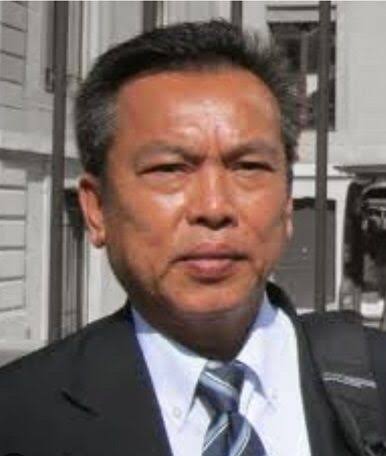
By DANIEL JOHN JAMBUN, President Borneo’s Plight in Malaysia Foundation (BoPiMaFo)
KOTA KINABALU: Borneo’s Plight in Malaysia Foundation (BoPiMaFo) welcomes the call by Sarawak DAP delegate Soo Tien Ren for Prime Minister Datuk Seri Anwar Ibrahim’s Government to establish Ombudsman Malaysia as part of the institutional reforms DAP should continue to pursue at the Federal level.
BoPiMaFo supports that call.
But the proposal immediately raises an even more important question for Sabah:
SARAWAK ALREADY HAS ITS OWN OMBUDSMAN. WHY DOES SABAH NOT HAVE ONE?
This is not a theoretical argument.
Sarawak has already moved ahead by establishing the Office of the Sarawak Ombudsman as an independent mechanism intended to address grievances, promote good governance and strengthen accountability in dealings between citizens and public institutions.
Sabah, meanwhile, continues to face repeated controversies involving public assets, state-owned enterprises, natural-resource concessions, failed projects, weak government delivery and allegations of abuse of administrative power.
So why should Sabah continue to lag behind?
If Sarawak can establish an Ombudsman to strengthen accountability at the State level, there is no convincing reason Sabah cannot do the same.
SABAH SHOULD NOT WAIT FOR PUTRAJAYA
The debate in DAP over whether Anwar should establish a Federal Ombudsman is important.
But Sabah should not wait for Putrajaya.
Good governance should not depend upon Federal initiative.
Sabah possesses its own constitutional institutions, State Legislature, public service, statutory bodies, government-linked companies, foundations and enormous natural resources.
Sabah therefore requires its own independent mechanism capable of scrutinising how State power is exercised and how public assets are managed.
The establishment of an independent Sabah Ombudsman should therefore become a major institutional reform priority.
SABAH HAS MORE THAN ENOUGH REASONS TO ESTABLISH ONE
If anyone questions the need, Sabah’s recent history provides ample justification.
Consider the controversies surrounding Sabah Mineral Management and the management of mineral concessions.
Where valuable mining rights and State resources are involved, Sabahans are entitled to know:
Who receives the licences?
How were they selected?
What due diligence was conducted?
Were there conflicts of interest?
What safeguards existed against political interference?
And most importantly:
Did Sabah obtain the best possible return from resources belonging to the people?
An independent Ombudsman could examine not merely whether a criminal offence occurred, but whether the administrative process itself was fair, transparent and in the public interest.
WHAT IS HAPPENING TO YAYASAN SABAH’S ASSETS AND RESOURCES?
The same concern applies to Yayasan Sabah.
Yayasan Sabah was created with vast land, forest, timber and commercial resources intended to generate wealth and opportunities for generations of Sabahans.
Yet Sabahans are entitled to ask:
Has Yayasan Sabah’s asset base expanded or declined?
How much land and timber wealth remains under its effective control?
How much has been transferred, leased or concessioned to outside parties?
What returns have Sabahans received?
Has its long-term capacity to generate income strengthened or weakened?
And if major assets or resources have been diminished over time, who was accountable for those decisions?
These are precisely the types of questions an independent oversight institution should be able to examine.
SABAH’S WEAK DELIVERY SYSTEM IS ALSO A FORM OF MALADMINISTRATION
An Ombudsman is not needed only for spectacular scandals.
Sabah also suffers from something ordinary people experience every day:
a weak government delivery system.
For decades Sabahans have been told about billions in allocations and numerous development programmes.
Yet many communities continue to endure:
– unreliable water supply;
– electricity disruptions;
– poor roads;
– delayed infrastructure projects;
– dilapidated schools;
– slow implementation of approved projects;
– poor coordination between agencies; and
– government departments that sometimes pass responsibility from one office to another.
Not every failure is corruption.
But prolonged delay, incompetence, poor administration and bureaucratic indifference can be equally damaging to the public.
An Ombudsman could investigate chronic maladministration and require agencies to explain why projects, services or applications remain unresolved.
Government should not merely announce allocations.
Government must deliver results.
IMAGINE IF SABAH HAD AN OMBUDSMAN YEARS AGO
Had Sabah possessed a truly independent Ombudsman years ago, could questions have been raised earlier concerning:
Sabah Development Bank?
Sabah Forest Industries?
The Pitas shrimp farming project?
Sabah Mineral Management?
Mining concessions?
Timber concessions?
State land allocations?
Yayasan Sabah’s declining assets and resources?
Troubled or non-performing State GLCs?
Major public projects that repeatedly failed to deliver?
Perhaps some controversies could have been detected earlier.
Perhaps some losses could have been prevented.
Perhaps public officers and whistleblowers would have had somewhere independent to bring their concerns.
The purpose of institutional accountability is not merely to investigate disasters after they happen.
It is to detect warning signs before the damage becomes irreversible.
MACC AND THE AUDITOR-GENERAL CANNOT DO EVERYTHING
Some may argue that Sabah already has the MACC, Auditor-General and courts.
They all perform essential functions.
But their roles are different.
MACC primarily investigates corruption offences.
The Auditor-General audits public finances.
The courts adjudicate legal rights and disputes.
An Ombudsman fills another critical space.
It examines maladministration:
unreasonable decisions, abuse of administrative discretion, conflicts of interest, procedural unfairness, bureaucratic delay, failure to act, improper conduct and administrative decisions that may be seriously wrong even where criminal corruption cannot yet be established.
This missing layer of accountability is exactly why Sabah needs one.
SARAWAK HAS SHOWN THAT A STATE OMBUDSMAN IS POSSIBLE
This is why Sarawak’s example matters.
Sarawak did not wait indefinitely for the Federal Government to create Ombudsman Malaysia.
It established its own Ombudsman institution.
Sabah should learn from that example.
For years Sabah leaders have repeatedly compared Sabah’s development ambitions with Sarawak.
Then let us also compare institutions of accountability.
If Sarawak believes that an Ombudsman is necessary for good governance, what makes Sabah so different?
Indeed, given the number of controversies surrounding Sabah’s public assets and resources, one could argue that Sabah needs such an institution even more urgently.
THE SABAH OMBUDSMAN MUST BE GENUINELY INDEPENDENT
BoPiMaFo does not support creating another ceremonial office.
A Sabah Ombudsman must not become another department controlled by the Chief Minister or Cabinet.
It should possess:
– statutory independence;
– security of tenure;
– independent funding;
– authority to investigate State ministries and departments;
– jurisdiction over local authorities and statutory bodies;
– jurisdiction over State GLCs and State-owned enterprises;
– jurisdiction over foundations managing public assets, including institutions such as Yayasan Sabah;
– powers to obtain documents and compel explanations;
– authority to investigate maladministration and abuse of power;
– protection for whistleblowers and complainants;
– power to initiate investigations on matters of serious public interest;
– direct reporting to the Sabah Legislative Assembly; and
– public disclosure of significant findings.
An Ombudsman that must first seek political permission to investigate politicians would be meaningless.
APPLY THE SAME STANDARD TO SABAH THAT DAP IS DEMANDING FROM ANWAR
BoPiMaFo therefore respectfully challenges DAP Sabah and every other political party in Sabah:
If you support an Ombudsman for Anwar’s Federal Government, will you support an Ombudsman for the Sabah Government?
The principle cannot change according to who holds power.
Transparency cannot be demanded only from political opponents.
Accountability cannot apply only in Putrajaya but disappear in Kota Kinabalu.
The standard must be the same.
And if the Sabah Government truly believes that it governs transparently and responsibly, then it should have nothing to fear from independent scrutiny.
IF THERE IS NOTHING TO HIDE, WHY FEAR AN OMBUDSMAN?
This proposal should not be viewed as an attack against any one government.
Governments change.
Institutions remain.
Today’s government may be tomorrow’s opposition.
Today’s opposition may become tomorrow’s government.
A Sabah Ombudsman would protect Sabahans regardless of which coalition is in power.
That is the whole point.
SABAH NEEDS STRONG INSTITUTIONS, NOT STRONGMEN
Sabah’s future cannot depend merely on personalities or promises.
A mature system of government builds institutions that make abuse, maladministration and incompetence harder regardless of who holds office.
Sarawak has already established an Ombudsman.
DAP is now calling upon Anwar to establish one at Federal level.
Sabah should be next.
BoPiMaFo therefore calls upon the Sabah Government and all Members of the Sabah Legislative Assembly to initiate legislation establishing a genuinely independent Sabah Ombudsman.
Sabahans deserve a government that is not merely powerful.
They deserve a government that is transparent, accountable, competent and answerable to the people.
And after so many controversies involving public resources, State enterprises, Yayasan Sabah, mineral concessions and weak government delivery, the question should no longer be:
“Why does Sabah need an Ombudsman?”
The better question is:
WHY HAS SABAH WAITED THIS LONG?