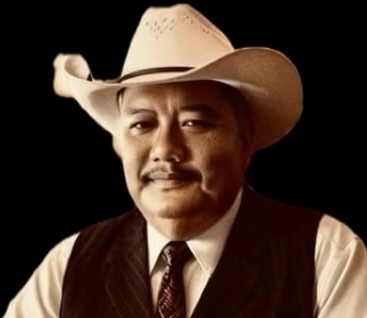
By Remy Majangkim (Majangkim Office)
KOTA KINABALU: Years after signing away the island, former Sabah Chief Minister Harris Salleh offered a confession that should have sent shockwaves through constitutional lawyers.
“We were misled,” he lamented, admitting the federal government failed to deliver on the glittering promises used to justify surrendering Labuan.
But in the cold calculus of constitutional law, being “misled” is not a defence. It is an indictment. If Harris admits he acted without full knowledge, the consent given by Sabah in 1984 was defective. And if the consent was defective, the entire legal architecture of the Labuan transfer collapses.
To understand how precarious the 1984 handover truly is, we must scrutinise the three pillars Harris Salleh failed to consult: the Malaysia Agreement 1963 (MA63), Article 49 of the Sabah State Constitution, and the ancient principles of Trust Law.
PILLAR ONE: THE CONSTITUTIONAL BIRTHRIGHT
The Malaysia Agreement 1963 (MA63) and Article 49
Every constitutional lawyer knows the foundational truth: Sabah’s constitutional birthright began with the Malaysia Agreement 1963 (MA63).
Signed on 9 July 1963 in London, MA63 was an international treaty between the United Kingdom, the Federation of Malaya, Singapore, Sarawak, and North Borneo (Sabah). It was registered with the United Nations, thereby giving it the full weight of treaty law.
The genius of MA63 lies in what it created. Article I declared that the colonies would be federated into a new nation called “Malaysia.” But critically, the Agreement did not dissolve the identity of these territories. Instead, it required each to adopt its own State Constitution as a condition of entry.
For North Borneo (Sabah), that annex was the Sabah State Constitution—a document not imposed by Malaya but negotiated and agreed upon as part of an international treaty. Every provision carries the authority of an international agreement.
And at the heart of that negotiated Constitution lies Article 49:
“All property and assets which immediately before the commencement of this Constitution were vested in Her Majesty for the purposes of the colony of North Borneo shall on the commencement of this Constitution vest in the State.”
Read that again. Article 49 is not merely a State law. It is a treaty-entrenched constitutional provision—a birth certificate written into the very DNA of Sabah’s existence.
On 15 September 1963, Labuan belonged to the British Crown as part of the Colony of North Borneo. At the stroke of midnight on 16 September—when MA63 came into force and the Sabah State Constitution commenced—the Crown’s title was automatically extinguished, and the State of Sabah stepped into its shoes.
Here is the explosive implication: The Federal Government never held the title deed to Labuan.
Kuala Lumpur never gave Labuan to Sabah; Sabah already owned it by constitutional fiat—rooted in international treaty law. You cannot transfer what you do not possess—nemo dat quod non habet (you cannot give what you do not have). When Harris Salleh signed the papers in 1984, he was not handing over federal property; he was surrendering Sabah’s original birthright—negotiated in London and registered at the UN—to a third party with no prior claim.
The 1984 transfer was not just politically questionable. It was a jurisdictional nullity.
PILLAR TWO: THE INTERNATIONAL RECOGNITION
The Malaysia Act 1963 and UN Registration
If MA63 provides the treaty basis and Article 49 provides constitutional title, the Malaysia Act 1963 provides international legal recognition.
On 31 July 1963, the UK Parliament passed an Act that reshaped Southeast Asia. Section 1 contains language the Federal Government would prefer you forget:
“Her Majesty’s sovereignty and jurisdiction in respect of the new States shall be relinquished so as to vest in the manner agreed between the United Kingdom… the Federation and the new States.”
“The new States.” Not colonies. Not territories. States.
The United Kingdom formally recognised North Borneo as a “new State” capable of entering an international agreement on equal terms with Malaya. Moreover, MA63 was registered with the United Nations under Article 102 of the UN Charter—the highest form of international legal recognition. While the annexes themselves were not separately registered, the Agreement that incorporated them by reference was—giving the entire MA63 package international treaty status.
Sabah did not enter Malaysia as a subordinate territory. It entered as an equal contracting party. (Equal among peers)
What does this mean for the 1984 handover? Any alteration of Sabah’s territorial integrity required the same level of international participation and democratic consent that accompanied its original entry. In 1984, none of this happened:
No international treaty amendment was sought.
No UK Parliamentary scrutiny was applied.
No UN registration occurred.
No public referendum was held.
In 1976, constitutional amendments diluted Sabah’s and Sarawak’s special status—an act that itself violated the MA63 framework and was later partially reversed under the Pakatan Harapan administration. The Labuan handover was its most grievous consequence.
PILLAR THREE: THE UNBREAKABLE VOW
The Trust Law Test
If MA63 provides the treaty foundation and Article 49 provides legal title, Trust Law provides the fiduciary straitjacket that should have contained Harris Salleh’s executive power.
Here is the uncomfortable truth: The State of Sabah is not the absolute owner of its territory. It is a trustee. Under the common law—which underpins Malaysia’s legal system—a trust exists when one party holds property for the benefit of another.
The Settlor, The British Crown, which relinquished sovereignty through MA63.
The Trustee, is the Sabah State Government, holding legal title.
The Beneficiaries: The rakyat (people) of Sabah, the true, equitable owners.
Admittedly, applying private trust law to sovereign territory is unconventional. But the public trust doctrine—recognised from Roman law to modern jurisprudence—holds that certain resources belong to the people and cannot be permanently alienated by transient governments. Federal lawyers will object that Trust Law governs private property. They are wrong—the public trust doctrine, which is part of our common law heritage, has long been applied to public resources like navigable waters, shorelines, and even national territories. Sabah’s territory is no less a public resource than a river or a coastline.
A trustee’s duties are exacting: undivided loyalty, preservation of assets, full transparency, and crucially—a trustee cannot permanently alienate trust assets without the explicit, informed consent of every beneficiary.
In 1984, did Harris Salleh ask the 700,000 Sabahans for their consent? No. Did he hold a referendum? No. Did he inform them of the full terms? No—the Official Secrets Act ensured they never knew. While he used his Berjaya majority in the State Assembly to ram the enactment through, he treated a temporary legislative majority as a mandate for permanent territorial surrender.
He invoked Article 2(b) of the Federal Constitution—a provision designed for minor border tweaks in “holding together” federations like India—and misapplied it to a “coming together” federation where Sabah, Sarawak, and Malaya formed the union as equal partners through an international treaty.
He carved away a piece of the beneficiaries’ inheritance and handed it over for promises that, by his own admission, were never kept.
THE MEETING OF THE PILLARS: A BREACH OF THE HIGHEST ORDER
When you place MA63, the Malaysia Act 1963, Article 49, and Trust Law side by side, the 1984 handover ceases to look like a political compromise and begins to look like a constitutional fraud.
PILLARs and its VIOLATION
MA63 (Treaty) Sabah is an equal contracting party with its own Constitution. No treaty amendment sought for territorial alteration.
Article 49 Sabah owns Labuan absolutely by constitutional vesting. Title surrendered to a third party with no claim.
Trust Law Sabah holds territory as trustee for the people.Beneficiaries never consulted, informed, or consented.
The conclusion is inescapable. The trustee breached his fiduciary duty: loyalty to Sabah, preservation of territorial integrity, and transparency to the rakyat.
If Sabah was birthed as a sovereign equal through an international treaty, its territory could not legally be stripped away by a single executive stroke.
THE FEDERAL GOVERNMENT’S DEFENCES—AND WHY THEY FAIL
Objection 1: “The State Assembly voted for it.”
A legislative majority is not informed consent. Harris himself admitted he was “misled”—the Assembly was misled too. Consent obtained through misinformation is no consent at all.
Objection 2: “Article 2(b) permits boundary alterations.”
Article 2(b) was designed for minor adjustments in “holding together” federations. Malaysia is a “coming together” federation born from equal partners through international treaty. Applying a provision for administrative tweaks to a permanent territorial excision is a constitutional category error.
Objection 3: “Forty-two years have cured any defect.”
Time does not cure a foundational breach of trust. Adverse possession does not apply to constitutional birthrights or treaty obligations. If the transfer was legally void in 1984, it remains legally void today.
THE PATH FORWARD: A STATE-INITIATED INQUIRY
Forty-two years of silence is enough. The question is no longer whether a wrong was committed—Harris Salleh confessed to being misled. The question is whether Sabah has the courage to demand an accounting.
The mechanism exists. Under Standing Order 18 of the Sabah DUN, any Member can move a substantive motion:
“That this House resolves that the 1984 handover of Labuan was constitutionally defective, having violated MA63 and Article 49, and calls upon the Dewan Rakyat to establish a bipartisan Select Committee to investigate the legality of the transfer.”
This is not a partisan gambit. It is a constitutional duty. Every DUN member swore an oath to defend the State Constitution. Article 49 is not optional. MA63 is not a historical curiosity.
Sabah should not walk this path alone. Sarawak, as the other equal partner in the 1963 compact, has an equal interest. A joint resolution from both Borneo States would be unanswerable. If Sarawak joins, the federal government cannot dismiss it as a Sabah “obsession”—it becomes a Borneo consensus.
Kuala Lumpur will resist. It will cite costs, complexity, and “national stability.” But stability built on a constitutional fault line is not stability—it is a fragile peace awaiting an earthquake.
Let the evidence be heard. Let the MA63 Special Cabinet Committee report be declassified. Let constitutional lawyers testify. Let the rakyat finally hear the full truth about what was taken from them.
THE RECKONING: A QUESTION FOR EVERY MP
For forty-two years, this anomaly has languished in constitutional obscurity. But time does not cure a foundational breach of trust.
As Malaysia grapples with the historical realisation of MA63 rights, every Member of Parliament must face a harrowing question:
Do we govern Labuan by genuine legal right, or are we merely holding onto the spoils of a betrayed trust?
The DUN must speak. The Dewan Rakyat must answer. And the people must judge.
APPENDIX: MODEL DUN MOTION
For the consideration of any Member of the Sabah State Legislative Assembly:
MOTION UNDER STANDING ORDER 18
“That this House:
(1) Notes with grave concern the admission by former Chief Minister Harris Salleh that he was ‘misled’ during the 1984 handover of Labuan to the Federal Government;
(2) Affirms that the Malaysia Agreement 1963 (MA63) is an international treaty registered with the United Nations, which established Sabah as an equal contracting party and required the adoption of the Sabah State Constitution;
(3) Affirms that Article 49 of the Sabah State Constitution vests all former Crown property—including Labuan—in the State, and that this provision carries the authority of an international treaty;
(4) Resolves that the 1984 transfer of Labuan was constitutionally defective for want of informed consent, international participation, and public consultation, and violated both MA63 and Article 49;
(5) Calls upon the Dewan Rakyat to establish a bipartisan Select Committee to investigate the legality of the transfer and to recommend appropriate constitutional or legal remedies;
(6) Urges the Federal Government to declassify all documents relating to the MA63 Special Cabinet Committee report and the 1984 negotiations;
(7) Requests that the Sarawak State Legislative Assembly consider a parallel resolution in the spirit of Borneo solidarity.”
THE THREE PILLARS SUMMARY TABLE
PILLAR SAYS VIOLATION
MA63 (Treaty), Sabah is an equal contracting party with its own Constitution. No treaty amendment sought for territorial alteration.
Article 49, Sabah owns Labuan absolutely by constitutional vesting. Title surrendered to a third party with no claim.
Trust Law, Sabah holds territory as a trustee for the people. Beneficiaries were never consulted, informed, or consented.
Disclaimer: This article is published for public information and democratic discourse regarding Sabah’s constitutional heritage. It does not constitute formal legal advice. Any definitive determination of legal rights remains within the purview of qualified legal professionals and the courts.