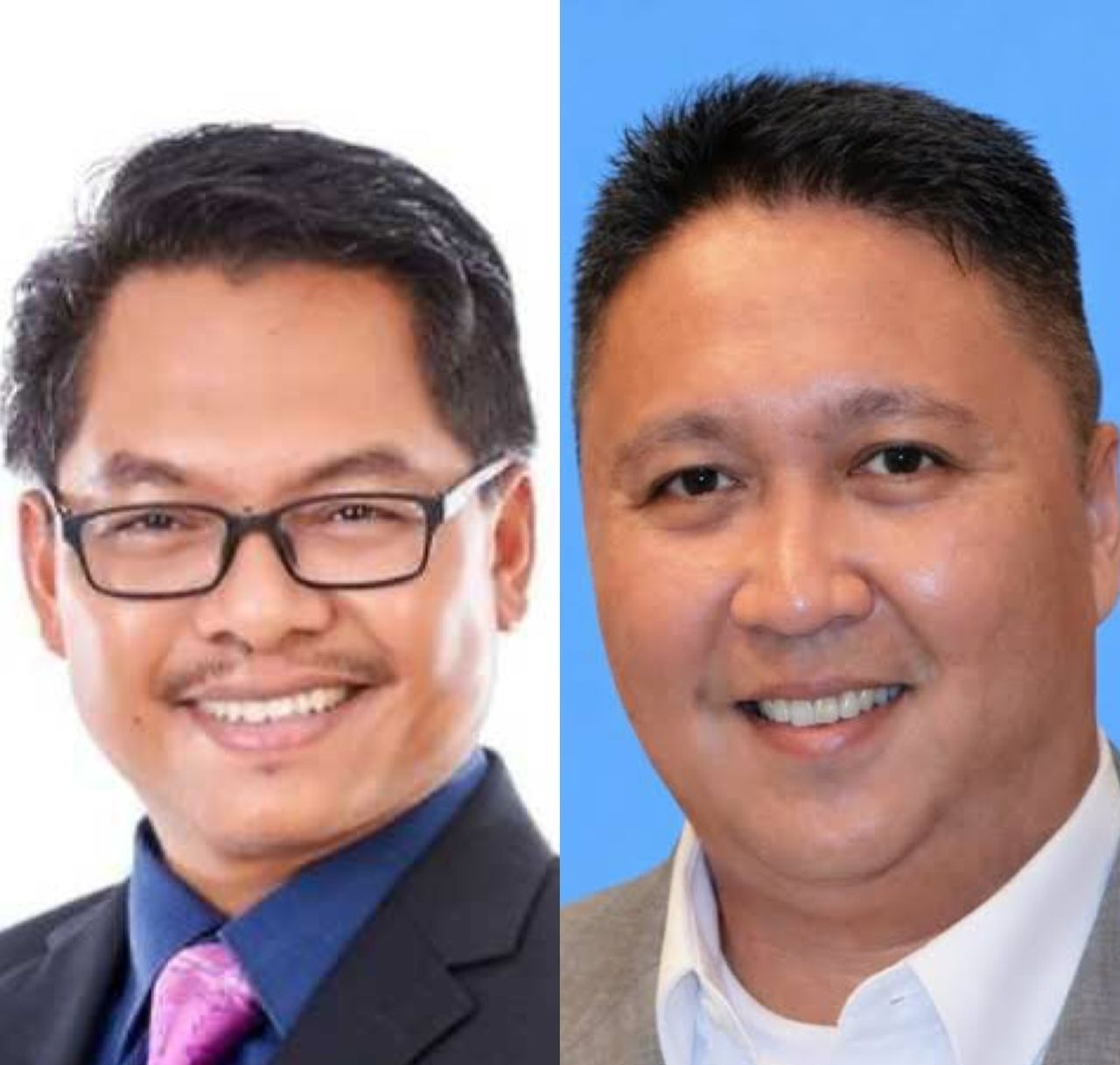
By: Mohd. Zaki Harry Susanto, Community Activist
(Zaki offers an impartial view by setting aside political bias and focusing on facts and recent developments.)
KOTA KINABALU: Since Datuk Seri Anwar Ibrahim assumed office as Malaysia’s Prime Minister in November 2022, ties between the federal government and Sabah have gradually improved, marking a more cooperative era compared to previous years.
While key issues remain unresolved—especially the long-standing call for Sabah to receive 40 percent of federal net revenue—it is clear that the central government has taken meaningful actions to reinforce Sabah’s role within the Malaysian federation.
One of the most notable shifts is the federal commitment to decentralize authority, a demand long championed by Sabah and Sarawak.
In the 2024 national budget, it was announced that state-level technical agencies in both regions would gain the authority to approve and manage federal development projects valued at up to RM50 million.
This move goes beyond routine administrative reform. It signals trust from the federal level in Sabah’s capacity to identify and prioritize development initiatives that better reflect local needs.
For Sabah, where project delays have often stemmed from drawn-out approval processes in Putrajaya, this change offers a path toward faster, more efficient, and locally responsive progress.
In the context of the Malaysia Agreement 1963 (MA63), the most notable achievement is the increase in the Special Grant for Sabah.
If in 2022 Sabah received RM125.6 million, the amount increased to RM300 million the following year before being raised to RM600 million and then RM1.5 billion starting in 2026.
Such a significant increase indicates the Federal Government’s readiness to move toward the true spirit of Article 112D of the Federal Constitution, even though the full formula for the 40 percent demand is still undergoing negotiations between the state and federal governments. In other words, we are approaching the goal of achieving a 40 percent demand, a situation that is significantly better compared to the circumstances prior to PMX.
More importantly, Sabah’s demands are no longer seen as a seasonal political issue. On the contrary, it is increasingly recognized as a right contained in the Malaysia formation document that needs to be respected and implemented gradually.
This approach conveys a clear message that Sabah is not just an ordinary state in the Federation, but a founding region of Malaysia with certain positions and rights as stipulated in MA63.
In related developments, it is also appropriate to give recognition to Sabah leaders who played a crucial role in bringing the voice of Borneo to the Federal Government level.
Among those often associated with these efforts is Datuk Mustapha Sakmud, who has been given the significant responsibility of advocating for various issues involving Sabah and Sarawak.
As a Sabahan in federal leadership, he is widely recognized for consistently championing issues tied to state rights, the advancement of the Borneo region, and the realization of the MA63 agenda.
While major decisions are typically reached collectively by the Cabinet and the MA63 Technical Committee, his active participation in negotiations and dialogue processes stands out and merits acknowledgment.
Several achievements linked to the Federal Government’s ongoing efforts to meet Borneo’s aspirations include the handover of regulatory authority over Bintulu Port to the Sarawak Government, the formal recognition of the Sabah and Sarawak Public Works Departments as technical agencies, the delegation of powers for implementing federal development initiatives, and other steps aimed at reinforcing the standing of Sabah and Sarawak within the Malaysian Federation.
In the energy sector, the Federal Government has demonstrated a willingness to grant Sabah greater autonomy in shaping its industrial path. Initiatives to enhance Sabah’s role in managing energy resources—through institutions like the Sabah Energy Corporation and through strategic partnerships with federal authorities—signal progress toward greater economic and energy self-determination.
Concurrently, the state government is advancing its goal of gaining increased oversight of Sabah Electricity Sdn Bhd (SESB), a process that requires sustained collaboration between federal and state levels to ensure a more reliable and competitive electricity supply for Sabah’s residents.
Moreover, Sabah continues to receive one of the largest development funding allocations in Malaysia (RM6.7 billion), supporting infrastructure projects such as road construction and upgrades, water supply systems, rural electrification, and the renovation of aging schools, hospitals, and healthcare centers, not to mention the proposed Sabah Heart Centre.
This underscores that Sabah’s development remains a key priority in national planning.
That said, significant challenges remain.
The people of Sabah are still awaiting final resolutions on key demands, including the allocation of 40 percent of federal net revenue, an increase in parliamentary representation befitting Sabah and Sarawak’s status as founding members of Malaysia, and other outstanding items on the MA63 agenda.
When assessed objectively, the PMX administration’s tenure so far has demonstrated measurable progress compared to the largely rhetorical political discourse common in earlier years.
While Sabah’s full rights under MA63 have not yet been completely restored, the process of reclaiming them is now unfolding in a more structured and deliberate way, with greater clarity of purpose.
Indeed, the fight for MA63 remains a long-term endeavor. Yet, the people of Sabah should also recognize fairly that issues which were once confined to discussion are now gradually being turned into concrete, observable actions.
In politics, success isn’t always defined by immediate or complete solutions, but often by the willingness to initiate reforms that can yield lasting benefits over time.
Within this framework, the PMX administration merits acknowledgment for helping to reshape the relationship between the federal government and Sabah—one that increasingly reflects the original spirit of Malaysia 1963, even though the ultimate goal has not yet been fully realized.
Sabah is slowly regaining its rights, step by step. The journey is far from finished, but the current trajectory indicates that the struggle is moving beyond mere promises and is increasingly grounded in tangible efforts.
Hopefully, all commitments made will eventually translate into real improvements for the people, rather than fading into history as unfulfilled debate.
Although there is still much more that the federal government needs to accomplish, the fact remains that PMX has done his utmost for Sabah and Sarawak thus far.
DISCLAIMER: The views expressed here are those of the author/contributor and do not necessarily represent the views of Jesselton Times.