BY TENGKU NOOR SHAMSIAH TENGKU ABDULLAH
KOTA KINABALU: The 17th Sabah state election has returned Gabungan Rakyat Sabah (GRS), led by Datuk Seri Hajiji Noor, to power — and Hajiji has already been sworn in for a second term as Chief Minister.
But the victory comes with a fractured mandate that highlights Sabah’s deepening shift away from federal coalitions toward local-based politics.
Polling on 29 November saw GRS emerge as the largest bloc but short of a simple majority.
Parti Warisan, led by Datuk Seri Shafie Apdal, consolidated its position as the biggest opposition force.
Federal coalitions suffered a damaging rout, with Pakatan Harapan (PH) and Perikatan Nasional (PN) reduced to single seats and Barisan Nasional (BN) sharply weakened. Independents and small parties once again held the balance of power.
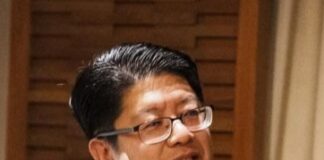
Political analyst Dr Oh Ei Sun said the result confirmed that “Sabah for Sabahans” has grown from slogan into voting instinct.
“If you classify the voters this time into the more urban or suburban ones and the more rural or interior ones, there are some common factors which affect their decisions. And number one, I think, would be this so-called Sabah for Sabahan sentiments.”
Across both urban and rural seats, he said voters delivered a clear message to federal-based parties.
“Across both urban and rural seats, you see these so-called federal parties, such as the PH parties, did not perform very well. I mean, the BN retained only six seats and PN only one seat. So, these federal parties are not doing very well and it reflects the Sabah for Sabahan sentiment, said Dr Oh, who is a Senior Fellow at Singapore Institute of International Affairs
But identity politics was not the only factor at play. Economic grievances and the failure of basic services were just as influential.
“There are also concerns about poor
infrastructure such as inadequate water supply, electricity supply, bad road conditions and inaccessible internet. For rural voters, they see the incumbent GRS government has been able to address that. For urban voters, they felt the GRS government did not do a good job, Dr Oh said.
Urban seats became the centre of protest voting because of political attribution.
According to Dr Oh, “In the urban seats, mostly it’s PKR or DAP, namely PH, and PH is affiliated with GRS, so urban voters blame PH. That’s why both PKR and DAP lost badly.”
Urban voters were also driven by governance and corruption issues.
“They are more exposed, more knowledgeable and more concerned about corruption. With videos capturing allegedly corrupt acts and the prime minister’s former political secretary being arrested, urban voters again punished PH,” the political analyst said
GRS, however, reaped the benefits of holding office.
“This GRS did well because it had the advantage of incumbency and being able to roll out programmes.”
Warisan’s showing also surprised observers.
“Warisan being able to retain 25 seats, at least on par if not surpassing their previous performance, is quite spectacular. They are now the party with all the Chinese-majority seats, so it’s up to them to see how they will advance the interests and rights of the Chinese community.”
More than any party result, however, it is Sabah’s “kingmakers” who now define the post-election balance.
“You’re already seeing these smaller parties and the five independent ADUNs. They are indeed the kingmakers. The Jeffrey Kitingans, the Ewon Benedicts and the Rubin Balangs — they are what enabled the GRS government to take shape. Certainly not PH, which has only one seat.”
This condition, Dr Oh argued, is self-perpetuating rather than temporary.
“When people see they only need to win one or two seats and can still become ministers, they are tempted to form new parties. Sabah politics will remain fragmented.”
On stability, Dr Oh urged restraint.
“Political manoeuvring will continue. Parties will enter or leave coalitions based on what benefits them. Political stability is yet to be seen. Let’s give it time.”
Despite the overwhelming shift toward local parties, supporters should not expect a confrontational posture toward Putrajaya.
“In theory, you might expect a more confrontational attitude toward the federal side. But I don’t think so. This GRS-led government was formed with federal blessing. We will continue to see a cordial working relationship.”
For Pakatan Harapan, the warning could not be clearer.
“This is a huge alarm clock for PH. Voters who supported PH just two or three years ago can abandon it en masse if they see it as tainted or failing to reform.”
The message from Sabah’s voters is decisive: power must be local, leadership must deliver, and loyalty is no longer guaranteed.
Local parties have risen. Federal coalitions have been humbled. Kingmakers have multiplied.
And Sabah remains what it has always been — Malaysia’s most unpredictable political battleground.
Sabah Cabinet Line-Up (December 2025)
Chief Minister
Datuk Seri Hajiji Noor (GRS – Gagasan Rakyat)
Deputy Chief Minister I & Minister of Works and Utilities
Datuk Seri Dr Joachim Gunsalam (PBS / GRS)
Deputy Chief Minister II & Minister of Finance
Datuk Seri Masidi Manjun (Gagasan Rakyat / GRS)
Deputy Chief Minister III & Minister of Industrial Development, Entrepreneurship and Transport
Datuk Ewon Benedick (UPKO / GRS coalition)
Minister of Local Government and Housing
Datuk Dr Mohd Arifin Mohd Arif (GRS)
Minister of Agriculture, Fisheries and Food Industry
Datuk Jamawi Jaafar (PH – PKR)
Minister of Rural Development
Datuk Rubin Balang (GRS)
Minister of Tourism, Culture and Environment
Datuk Jafry Ariffin (BN – UMNO)
Minister of Women, Health and Community Well-Being
Datuk Seri Julita Mojungki (GRS)
Minister of Youth, Sports and Creative Economy
Datuk Nizam Abu Bakar Titingan (GRS)
Minister of Education, Science, Technology and Innovation
Datuk James Ratib (GRS)
— TNS NEWS