KOTA KINABALU: The recent victory of Parti Islam Se-Malaysia (PAS) in Karambunai marks a historic turning point in Sabah’s political landscape.
For the first time, PAS secured an elected seat in East Malaysia, a region long considered resistant to the party’s ideological reach, and valued moderation.
Yet this breakthrough cannot be understood in isolation. It is the culmination of demographic and political shifts seeded decades earlier during the controversial Project IC of the 1990s.
Karambunai itself offers a telling backdrop. Traditionally occupied by native Sabahans, with Chinese communities scattered across the area, its social fabric was dramatically altered in the 1990s.
Project IC coincided with the opening of government lands and the establishment of new villages, often on property taken from indigenous communities.
The creation of the Kota Kinabalu Industrial Park displaced native landholders, many of whom remain without formal titles despite building homes and settlements.
For these communities, the sudden influx of new populations was not only a dispossession but also a disruption, as some of the settlements became associated with crime and drugs.
PAS’s Breakthrough in Karambunai
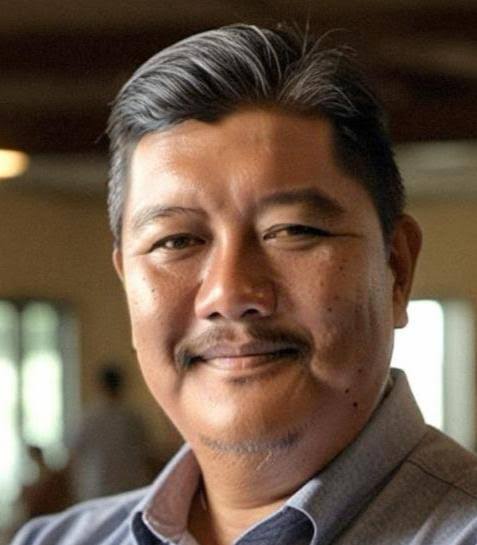
In the 2025 Sabah state election, PAS candidate Datuk Dr Aliakbar Gulasan won the Karambunai seat with a razor-thin majority of 371 votes in an 11-cornered contest.
The numbers may be modest, but the symbolism is immense: PAS has crossed into Sabah’s electoral terrain, claiming legitimacy in a state where its presence was once marginal.
For PAS leaders, this is proof of growing acceptance; for observers, it is a reminder of how Sabah’s political landscape has been reshaped over decades of deliberate intervention.
Project IC: Engineering Demographics, Engineering Politics
The roots of this transformation lie in Project IC, a covert programme in the late 1980s and 1990s where identity cards were allegedly issued to migrants in Sabah.
The Royal Commission of Inquiry later confirmed that the project aimed to:
Expand the Muslim population in Sabah, historically dominated by Christian and indigenous communities.
Undermine Parti Bersatu Sabah (PBS), the Christian-led ruling party at the time.
By absorbing hundreds of thousands of migrants into the electorate, Project IC permanently altered Sabah’s demographic balance.
What was once a Christian-majority state became increasingly plural, with Muslim voters forming decisive blocs in constituencies that had previously been beyond PAS’s reach.
Intertwining Legacies: From Project IC to PAS’s Rise
PAS’s victory in Karambunai is not an isolated event. It is the visible outcome of demographic shifts engineered decades ago.
The expanded Muslim voter base created by Project IC provided fertile ground for PAS to contest and eventually win. Karambunai, once peripheral to PAS’s influence, now stands as a symbol of how statecraft of the 1990s continues to ripple through Sabah’s politics today.
This intertwining of past and present raises critical questions:
Is PAS’s win a genuine reflection of grassroots acceptance, or the culmination of demographic engineering?
Does Karambunai represent a new chapter of political pluralism, or the consolidation of a long-planned transformation?
Symbolism and Structural Reality
For PAS, the Karambunai seat is a trophy of legitimacy. For Sabahans, it is a reminder that the political map is never neutral—it is shaped by both lived struggles and imposed structures.
The victory underscores how justice in Sabah is not only argued in courts or commissions but lived in the ballot box, where the legacies of Project IC continue to manifest.
Managing the Legacy: Questions for GRS
The rise of PAS in Karambunai, intertwined with the legacy of Project IC, demands urgent reflection and action from Gabungan Rakyat Sabah (GRS). Key questions include:
Land and Identity
How will GRS address the unresolved land titles of displaced natives in Karambunai and surrounding areas?
What safeguards can be introduced to prevent further dispossession under industrial or development projects?
Demographics and Legitimacy
How does GRS plan to reconcile the demographic shifts caused by Project IC with the rights of indigenous communities?
Can mechanisms be established to ensure electoral legitimacy is not undermined by past demographic engineering?
Social Cohesion and Security
What steps will GRS take to address crime and drug issues in settlements created during Project IC?
How can community policing and rehabilitation programs be strengthened to restore trust among native residents?
Political Balance
How will GRS manage the entry of PAS into Sabah’s political map without destabilizing the state’s plural fabric?
Can GRS articulate a vision of pluralism that respects both indigenous rights and the realities of Sabah’s diverse electorate?
Steps GRS Could Take
To manage these challenges, GRS could consider:
Land Reform & Restitution: Fast-track native land titles and establish a transparent mechanism for restitution where displacement occurred.
Community Engagement: Create dialogue platforms between native communities, migrant settlers, and political actors to reduce tension and foster shared responsibility.
Security & Rehabilitation: Invest in community policing, youth rehabilitation, and anti-drug initiatives in settlements linked to Project IC.
Electoral Safeguards: Strengthen voter registration oversight and ensure transparency in constituency boundaries to protect legitimacy.
Pluralism Charter: Draft a Sabah Pluralism Charter affirming indigenous rights, religious diversity, and political balance, positioning GRS as a guardian of unity.
Historical Reckoning: Commission a state-level truth and reconciliation process on Project IC, acknowledging its impact while charting a path forward.
Conclusion: Shadows of the Past, Signals of the Future
PAS’s breakthrough in Karambunai is both a milestone and a mirror.
It is a milestone for PAS’s entry into Sabah’s electoral map, and a mirror reflecting the enduring influence of policies that redefined identity, belonging, and representation.
The challenge for Sabah now is to confront this legacy honestly, ensuring that future victories—whoever claims them—are rooted not in shadows of manipulation but in the genuine will of its people.