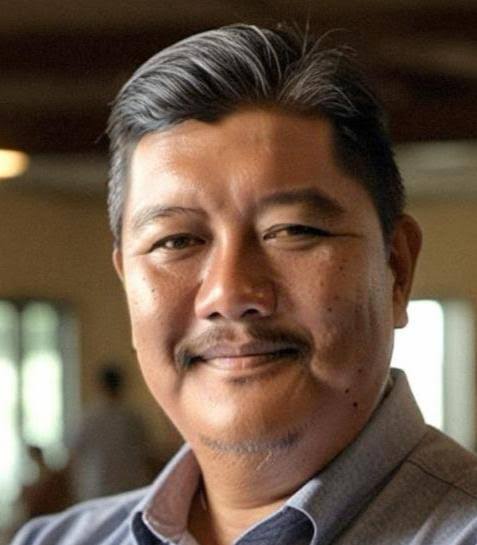
By Remy Majangkim
KOTA KINABALU: Legitimacy in a parliamentary democracy is never just about law; it is about confidence.
The Sabah State Election of 2025 produced a hung assembly, with no coalition reaching the decisive threshold of 37 seats.
In the early hours of Sunday morning, Datuk Hajiji Noor of Gabungan Rakyat Sabah (GRS) was sworn in by the Governor, claiming majority support. Yet without transparent proof, this swearing-in rests on fragile ground.
The Sabah Constitution empowers the Governor to appoint as Chief Minister the person he believes is likely to command majority confidence.
Legally, the appointment stands. Politically, however, legitimacy remains suspended until tested in the Assembly. A government sworn in at 3:11am may be valid in form, but until it withstands the daylight of a confidence vote, it remains vulnerable to doubt.
Fragile legitimacy matters because it erodes trust in institutions. When legality substitutes for visible proof, citizens question whether their mandate has been honored. Malaysia’s precedents—Perak in 2009 and Sabah in 2018—remind us that courts defer to the Assembly as the true arena of legitimacy.
The people’s representatives, not midnight ceremonies, must decide who governs.
This fragility is already visible. Barely three days into the new government, at least 12 GRS assemblymen and independents gathered separately, signaling unease and effectively holding the government hostage.
Their actions underscore how quickly alliances can shift and how unstable the foundation of power remains.
Sabah today stands at a delicate threshold. If GRS proves majority support in the Assembly, the government stabilizes.
If not, Sabah enters a constitutional impasse, forcing either a new coalition or fresh elections.
Advocacy must therefore insist on one principle: legitimacy is not complete until it is tested openly before the Assembly. A government born at midnight must survive the sunrise—only daylight votes can crown its authority.