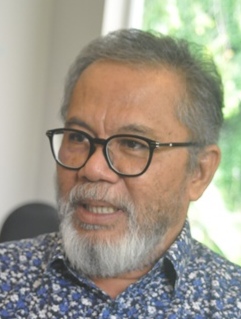
By Political Analyst Gundohing Musli Oli
KOTA KINABALU: Today marks the Nomination Day for the 17th Sabah State Election.
From my analysis of 73 DUN areas, I found a tendency for the people to return to supporting Barisan Nasional (BN).
Since 2018, the two governments that emerged after the fall of Barisan Nasional (BN), namely Warisan (2018–2020) and Gabungan Rakyat Sabah, GRS (2020–2025), have failed to provide what the people once experienced under BN: planned progress, political stability, and prosperity.
The Warisan administration was marked by chaos and confusion.
The mandate received was not accompanied by a strengthening of power structures; instead, it was swept away by betrayal, step by step. During this time, the phenomenon of “party-hopping” became normalized, turning into a nauseating political culture.
This not only eroded public trust in institutions but also undermined the political morality of the state. Sabah became a testing ground for all forms of disloyalty, while the issues affecting the people continued to be neglected.
The GRS, which replaced Warisan, is even worse.
Yes, the surface appears stable, but beneath it, there is always turmoil, much like a beautiful building with a cracked foundation.
The government may stand firm, yet it has never truly been solid. The focus is more on power plays than on establishing a foundation for development.
When compared to the BN era, the gap is evident. BN successfully laid down a structured development foundation, a stable administrative framework, and an economic direction that did not shift every two or three years.
The government does not face upheaval every month, does not fall due to the leaders’ egos, and the citizens do not live in uncertainty about who might defect the next morning.
In politics, stability is a fundamental necessity, and BN once provided political stability for over 24 years.
As we approach PRN17, a prediction is becoming increasingly clear: no party, including large coalitions, will be able to form a government on its own.
The fragmentation of support, demographic realities, and recent electoral records indicate that the political landscape in Sabah remains divided in various directions.
Warisan is expected to rise and secure a significant number of seats, but it may not be enough to dominate the DUN.
The main competitor is BN. BN’s advantage lies in the support from other parties to lead the government after the results are announced on November 29th.