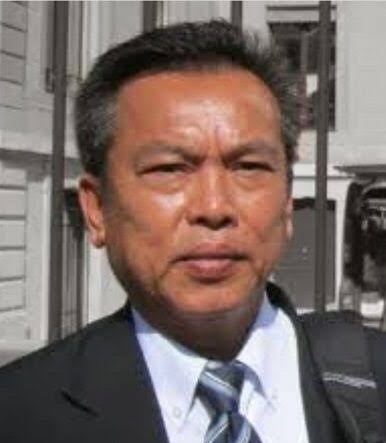
By Daniel John Jambun Borneo’s Plight in Malaysia Foundation (BoPiMaFo)
KOTA KINABALU: Borneo’s Plight in Malaysia Foundation (BoPiMaFo) states that Sabah is no longer facing isolated challenges.
Sabah is facing a systemic, multi-sector crisis — the result of prolonged failures in governance, constitutional compliance, and equitable development.
Let us be absolutely clear:
What Sabah is experiencing today is not accidental.
It is the accumulated consequence of delayed rights, denied resources, and unfulfilled safeguards.
1. FROM MA63 TO TODAY — THE PROMISES HAVE NOT TRANSLATED INTO REALITY
Malaysia Agreement 1963 was the foundation upon which Sabah agreed to form Malaysia.
It promised:
balanced development
protection of state interests
equitable treatment within the Federation
Yet today, Sabah stands as:
the poorest state in Malaysia
one of the most under-resourced in public services
This raises a fundamental question:
Have the safeguards of MA63 been honoured in substance — or only in words?
2. THE 40% REVENUE ENTITLEMENT — A RIGHT DELAYED IS DEVELOPMENT DENIED
Under Articles 112C and 112D of the Federal Constitution, Sabah is entitled to 40% of net revenue derived from the State.
This provision was meant to ensure Sabah would have the financial capacity to develop and progress.
The courts have affirmed this right.
Deadlines have been set.
Yet enforcement is delayed through legal processes, including appeals and a stay of execution.
The reality is simple:
Sabah’s right exists — but Sabah is not yet receiving its full benefit.
And the consequences are visible.
3. HEALTHCARE IN CRISIS — ONE-THIRD OF THE DOCTORS REQUIRED
As confirmed by Julita Majungki, Sabah faces a shortage of nearly 6,000 doctors.
With only about 2,800 doctors instead of the 9,000 required, Sabah is operating at barely one-third of its healthcare capacity.
This means:
longer waiting times
overstretched medical staff
reduced access to care, especially in rural areas
This is not a temporary issue.
This is a structural healthcare deficit.
4. POVERTY REMAINS THE HIGHEST — AND THE BURDEN IS UNEQUAL
At the same time, Sabah continues to record the highest poverty rate in Malaysia.
This creates a compounding effect:
the poorest communities face the greatest health risks
yet they have the least access to adequate healthcare
When poverty and weak public services intersect, the outcome is predictable:
inequality deepens, and recovery becomes harder.
5. THE RCI — A WARNING LEFT UNIMPLEMENTED
The Royal Commission of Inquiry (RCI) on Illegal Immigrants in Sabah (2013) highlighted serious systemic issues affecting governance, demographic integrity, and institutional accountability.
Yet more than a decade later:
implementation remains incomplete
key recommendations remain unfulfilled
This reflects a deeper concern:
Even when problems are identified at the highest level, corrective action is delayed.
6. A PATTERN OF DELAY, NOT A SERIES OF INCIDENTS
Across all these issues, a consistent pattern emerges:
safeguards acknowledged — but not fully realised
rights affirmed — but not fully enforced
problems identified — but not fully resolved
From MA63…
To the 40% entitlement…
To the RCI…
To healthcare and poverty…
The outcome is the same: Sabah continues to lag behind.
7. THIS IS NO LONGER ADMINISTRATIVE — IT IS STRUCTURAL
A Federation must function on:
equity
accountability
timely compliance with constitutional obligations
When one of its founding partners experiences:
persistent poverty
under-resourced public services
delayed implementation of critical reforms
the issue is no longer administrative.
It becomes structural.
8. THE WAY FORWARD — RESTORE RIGHTS, RESTORE BALANCE
BoPiMaFo calls for:
full and good-faith compliance with Sabah’s 40% revenue entitlement
accelerated and transparent implementation of RCI recommendations
urgent intervention to address healthcare workforce shortages
integrated strategies linking poverty reduction with public service delivery
a renewed federal commitment to honour the spirit and substance of MA63
These are not demands for special treatment.
These are calls for restoring balance within the Federation.
Let us be absolutely clear:
Sabah did not enter Malaysia to become:
the poorest
the most under-served
the most structurally disadvantaged
If today Sabah faces:
delayed constitutional rights
insufficient resources
weak public services
persistent poverty
then this is not a coincidence.
It is the cumulative result of systemic failure.
“When rights are delayed, resources are withheld, and reforms are postponed, the cost is not abstract — it is borne by the people.”
“Sabah is not asking for more. Sabah is asking for what was promised.”