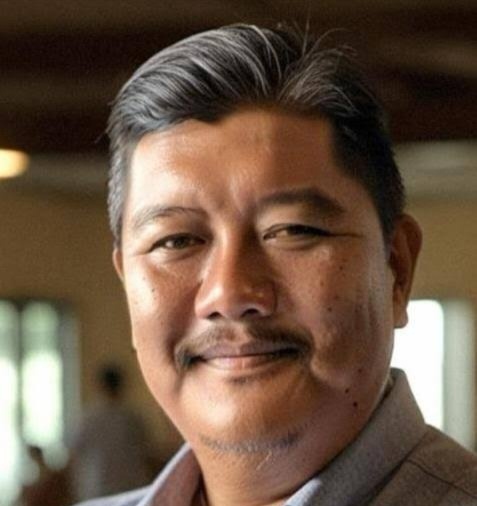
By Remy Majangkim (Majangkim Office)
Disclaimer: This article is based entirely on information that is already in the public domain — including court records, parliamentary proceedings, official MACC statements, and media reports. All statements attributed to individuals are drawn from these public sources. The views expressed are the author’s own.
SANDAKAN: There is a tree in the forest that everyone is looking at.
It is tall and ancient, laden with oil and gas worth billions. Its name is Ambalat.
Politicians fly to Sabah to stand beneath it. They promise to protect it. They speak of sovereignty, of defending every inch of Sabah. The cameras roll. The headlines run.
The Prime Minister himself has travelled to Kota Kinabalu to reassure the people: “I represent the federal government in defending Sabah’s rights. We will not compromise a single inch.”
But a forest is not one tree.
While the nation watches Ambalat – the diplomatic negotiations, the joint development proposals, and the high-stakes geopolitics – the rest of the forest is being logged. Quietly. Selectively. With receipts and WhatsApp messages and cash delivered to houses in Bangsar and Putrajaya.
A businessman named Albert Tei Jiann Cheing documented it. He named 15 individuals, including a former senior political secretary to the prime minister and high-ranking Sabah officials. He released videos, messages, and receipts.
He is now facing seven corruption charges.
Most of those he named are not.
This is not about one scandal. It is about a pattern. It is about how power operates when no one is looking. And right now, no one is looking. Because Ambalat is the tree, and the forest is burning.
The Smokescreen Thesis
In July 2025, I wrote in the Jesselton Times what many in Sabah were already beginning to suspect:
“To cover their shortcomings, they create a smokescreen centred around the Ambalat oil fields, which may also be linked to the Sabah mining licence scandal.”
I was not guessing. I was observing. At that time, the mining scandal revelations were fresh. Albert Tei had released his first videos. The names were circulating. The public was paying attention.
Then, suddenly, the narrative shifted.
The Prime Minister announced cooperation with Indonesia on Ambalat. Sabah leaders reacted with alarm. Questions were asked about sovereignty, about MA63, about whether Sabah was being consulted. The media followed. The headlines roared. And the mining scandal — with its 15 names, its documented payments, and its whistleblower behind bars — faded from the front pages.
A smokescreen, by definition, is a strategic illusion that diverts attention from the core issues at hand. Whether intentional or not, the effect has been the same: while Sabah debates Ambalat, the mining scandal has been allowed to drift, unresolved, unexplained.
What Is Known Publicly
The mining scandal came to public attention in mid-2025, when Albert Tei released a series of videos, WhatsApp conversations, and financial records alleging that political figures at both federal and state levels had received payments in connection with mineral exploration licence approvals in Sabah.
According to public reports and court records:
Tei alleged that Datuk Seri Shamsul Iskandar Mohd Akin, then senior political secretary to the prime minister, received payments and goods totalling over RM176,000. Shamsul Iskandar resigned from his post in November 2025 and has denied the allegations.
Tei alleged discussions involving Datuk Seri Jeffrey Kitingan, then deputy chief minister, regarding a mining project. In WhatsApp messages cited by Malaysiakini, Tei referred to the project as their shared “piggy bank” (tabung simpanan). Kitingan has denied any wrongdoing.
Tei alleged that RM550,000 was paid to Dr Joachim Gunsalam, who confirmed receiving it as a political donation.
A spokesman for Parti Gagasan Rakyat Sabah (PGRS) revealed that Tei had applied for mineral exploration licences through more than 20 different companies, covering nearly one million acres of Sabah land.
Sabah Chief Minister Hajiji Noor has been cleared by MACC of any involvement.
The Legal Proceedings: A Disparity of Outcomes
What followed has been a matter of public court records.
Albert Tei has been charged with multiple corruption offences:
Two counts in Kota Kinabalu involving RM350,000 paid to two former assemblymen
Five counts in Kuala Lumpur and Shah Alam related to payments allegedly made to Shamsul Iskandar
He has pleaded not guilty to all charges and is currently on bail.
As for the individuals he named:
Shamsul Iskandar has not been charged, though he resigned from his government post.
Two former assemblymen have been charged.
The remaining individuals — more than 10 of the 15 originally named — have not faced prosecution.
MACC Chief Commissioner Tan Sri Azam Baki confirmed in September 2025 that the remaining assemblymen were “still under review, with no decisions yet from the deputy public prosecutor”. In March 2026, eight Warisan assemblymen submitted a memorandum to MACC demanding clarity on why only some have been charged.
These are matters of public record.
Another Tree in the Forest: Farhash Salvador
In July 2025, online news portal MalaysiaNow published a report alleging that a company linked to Datuk Seri Farhash Wafa Salvador — a businessman and former political secretary to the Prime Minister — had been granted mineral exploration rights covering over 70,000 acres in Sabah.
The case took a different trajectory from the Albert Tei allegations.
Farhash Salvador publicly denied the allegations. On September 9, 2025, MACC Chief Commissioner Azam Baki announced that the investigation had been completed and closed. His findings were unequivocal:
The company never applied for land from the Sabah state government.
It submitted a mineral exploration application to Sabah Mineral Management Sdn Bhd (SMM).
SMM granted conditional approval in March 2023, pending documentation.
The company failed to submit the required documents.
The application was cancelled on March 21, 2025.
No exploration activities ever took place.
In a parliamentary written reply on October 30, 2025, Minister in the Prime Minister’s Department Datuk Seri Azalina Othman Said confirmed that the Deputy Public Prosecutor had closed the case, finding no offence under the MACC Act 2009 or any other law.
That case is now closed. No charges were filed against any party.
In January 2026, Farhash Salvador was awarded RM550,000 in damages in a defamation suit against a political activist who had made allegations of corruption and abuse of power against him. The court found the statements were “serious, damaging and actionable” and that the defendants had acted with malice.
The Question That Cannot Be Avoided
When one case — involving a businessman with no political ties — results in seven charges, while another — involving a figure with close ties to the Prime Minister’s office — is opened and closed within months with a public announcement of clearance, Sabahans are entitled to ask, ‘Why?’
This is not an accusation. It is an observation about outcomes.
The law, properly understood, is a precise endeavour. It does not distinguish between the whistleblower and the powerful. It applies equally, or it fails entirely. Yet what we see in these cases is a pattern that appears to lack precision.
Albert Tei: Named names, provided evidence, and now faces seven charges.
The 15 individuals: most remain unchanged.
Farhash Salvador: Investigation opened, closed, and declared free of wrongdoing.
When the law is applied with precision, such disparities invite explanation. When no explanation is offered, the silence itself becomes a statement.
The Role of Structure
These questions are not merely about individual cases. They are about the institutional framework within which MACC operates.
MACC is currently situated under the Prime Minister’s Department (PMD), not Parliament. This structural arrangement has long been a subject of concern. The Malaysian Bar has called for removing the MACC from the PMD, arguing that its placement there “raises concerns about executive influence over the agency”.
The Centre to Combat Corruption and Cronyism (C4) has noted that the appointment of the MACC Chief Commissioner—made on the advice of the Prime Minister—creates unavoidable perception challenges.
As C4 has observed, “How is the MACC chief commissioner supposed to carry out their duty impartially when their position is arbitrarily decided by the PM?”
In June 2024, Prime Minister Anwar Ibrahim stated that Putrajaya would “study the implications” of moving MACC under Parliament. To date, no action has been taken.
When an anti-corruption commission sits under the office of the prime minister and when cases involving figures close to that office are closed while others proceed, perception becomes reality. Trust erodes.
Questions That Demand Answers
There are questions that many in Sabah are quietly asking. These are not accusations.
They are legitimate enquiries about how institutions are functioning:
Why have only two of the 15 individuals named in the mining scandal been prosecuted to date?
What accounts for the difference in how the whistleblower and the alleged recipients have been treated?
What explains the difference in how the Albert Tei case and the Farhash Salvador case were handled – one resulting in seven charges, the other closed with no action?
Why has the promised reform to move MACC under parliamentary oversight not been implemented?
These questions arise not from suspicion but from the public record. When an anti-corruption commission charges the person who brought allegations forward while political figures named remain largely untouched, it is reasonable to ask why. When investigations involving political figures with close ties to power are opened and closed with public announcements of clearance, it is reasonable to ask about consistency.
Conclusion:
The Forest, Not the Tree
Ambalat matters. Sovereignty matters. The trillions in oil and gas reserves off Sabah’s coast are rightfully a matter of national concern. But while the nation watches Ambalat, the forest around it is being logged.
The mining scandal has exposed not only allegations of corruption but also the limits of public confidence in the institutions meant to address them. Whether MACC is perceived to be independent matters as much as whether it actually is. Perception, in matters of public trust, becomes reality.
Sabahans have watched these cases unfold. They have seen documents, messages, and allegations made public. They have seen who has been charged and who has not. They have seen one case result in prosecution and another closed with official statements of clearance.
And they are waiting — not for conclusions, but for the precision that the law promises.
When that precision is absent, the silence is not neutrality. It is a failure of the very idea of justice.
The tree is not the forest. The forest is everything else.
There is an old adage: going to the forest looking for the tree. It means getting lost in the one thing while missing everything around it. Ambalat is the tree. The forest is Sabah — its land, its resources, its people, and its future. Do not be so distracted by the tree that you fail to see what is being taken from the forest.