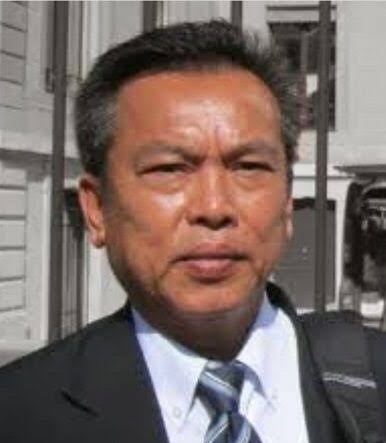
By Daniel John Jambun, Borneo’s Plight in Malaysia Foundation (BoPiMaFo)
KOTA KINABALU: On the Structural and Constitutional Rights of Sabah and Sarawak within Malaysia
Writen in the interest of constitutional integrity, equitable development, and the protection of human rights.
I. EXECUTIVE SUMMARY
This submission raises concerns regarding the structural and constitutional position of Sabah and Sarawak within Malaysia.
While Malaysia is formally constituted as a federation, significant issues arise concerning:
the equality of constituent territories
the implementation of constitutional guarantees
the concentration of political and fiscal authority
This submission contends that these structural conditions may affect the full enjoyment of rights by the peoples of Sabah and Sarawak, including their right to meaningful self-governance and equitable development.
II. BACKGROUND AND CONTEXT
A. Formation of Malaysia
Malaysia was established in 1963 through the union of:
Malaya
North Borneo (Sabah)
Sarawak
Singapore (subsequently separated in 1965)
The formation was governed by:
the Malaysia Agreement 1963 (MA63)
the Inter-Governmental Committee (IGC) Report (1962)
These instruments envisaged a federation of distinct and co-equal entities, with safeguards for autonomy and rights.
B. Current Structural Concerns
Over time, a number of structural developments have emerged:
- Absence of Malaya as a Distinct Federal Unit
Malaya does not exist as a separately constituted entity
Federal authority operates without clear structural distinction from its historical base
- Centralisation of Authority
Executive and administrative powers are concentrated at the federal level
Limited institutional mechanisms exist to ensure parity among constituent territories
- Fiscal Imbalance
Revenues generated in Sabah and Sarawak are centrally administered
Allocation and redistribution mechanisms lack transparency and equity
III. HUMAN RIGHTS IMPLICATIONS
A. Right to Self-Determination
Under international law, including:
UN General Assembly Resolution 1514 (XV)
UN General Assembly Resolution 1541 (XV)
Peoples have the right to self-determination, including meaningful participation in governance and control over their resources.
Concerns arise as to whether:
The peoples of Sabah and Sarawak exercise effective control over their economic and political development within the federation.
B. Equality and Non-Discrimination
The structural arrangement raises questions regarding:
equal status of constituent territories
equitable access to development resources
Disparities in development outcomes and fiscal allocation may give rise to:
Perceptions of unequal treatment within the federal system.
C. Economic and Social Rights
Issues relating to:
revenue distribution
infrastructure development
economic opportunities
may affect the realisation of rights such as:
the right to development
the right to an adequate standard of living
IV. THE 40% REVENUE ENTITLEMENT ISSUE
Under the Federal Constitution of Malaysia:
Sabah is entitled to 40% of net revenue derived from the state
However:
The constitutional review mechanism has not been fully implemented
The entitlement has not been realised in practice over several decades
This raises concerns regarding:
compliance with constitutional guarantees
equitable resource distribution
The prolonged non-implementation of a constitutionally grounded entitlement may constitute not merely an administrative lapse, but a continuing structural inequity with direct human rights implications.
V. INTERNATIONAL COMPARATIVE CONTEXT
International experience demonstrates that:
federations require clear institutional separation
and balanced distribution of authority
In certain historical contexts, such as the post-dissolution dynamics of Yugoslavia involving Serbia,
issues arose where one entity retained disproportionate control over federal structures.
While not identical, this comparison highlights a broader principle:
Structural imbalance within federations can raise questions of legitimacy and equality.
VI. PATTERNS AND SYSTEMIC CONCERNS
A. Patterns of Long-Term Structural Concern
Evidence suggests that the issues identified are not isolated, but form part of a long-term structural pattern, including:
prolonged delays in implementing constitutional obligations
progressive centralisation of decision-making authority
persistent disparities in development indicators
limited institutional avenues for effective redress
These patterns raise concerns regarding the consistency of governance practices with the principles of equality and good faith underpinning the federation.
B. Access to Remedy and Accountability
Concerns are also raised regarding the availability of effective remedies, including:
limited mechanisms for constitutional enforcement at the regional level
prolonged legal and administrative processes
absence of independent institutional review of federal-state disputes
This may affect the ability of affected communities to obtain timely and effective redress, as required under international human rights standards.
VII. KEY CONCERNS
This submission respectfully highlights the following concerns:
- Structural imbalance within the federal system
- Lack of clear institutional distinction among constituent entities
- Non-implementation of constitutional fiscal guarantees
- Potential limitations on meaningful self-governance
- Disparities in development and resource allocation
VIII. RECOMMENDATIONS
A. Structural and Constitutional Measures
- Malaysia undertake a comprehensive review of its federal structure
to ensure alignment with the original framework of MA63 - Ensure full and transparent implementation of constitutional provisions,
including the 40% revenue entitlement - Strengthen institutional mechanisms
to guarantee equality among constituent territories - Enhance transparency and accountability in fiscal distribution
- Promote meaningful participation of Sabah and Sarawak
in decisions affecting their economic and political development
B. Request for International Engagement
This submission respectfully invites the United Nations Human Rights Council and relevant mandate holders to:
engage constructively with the Government of Malaysia
encourage transparency in federal-constituent relations
consider these concerns within the Universal Periodic Review (UPR) process
C. Relevant UN Mandates
The issues raised may be relevant to the mandates of:
Special Rapporteur on the right to development
Special Rapporteur on extreme poverty and human rights
Special Rapporteur on minority issues
IX. RISK OF INSTITUTIONAL EROSION
If left unaddressed, the structural issues identified may:
erode confidence in federal institutions
deepen perceptions of inequality
and undermine long-term cohesion within the federation
Addressing these concerns proactively is therefore not only a legal necessity, but a matter of national stability and unity.
CONCLUSION
This position does not challenge the sovereignty of Malaysia.
Rather, it calls for:
A reaffirmation of the principles upon which the federation was founded — equality, autonomy, and good faith.
Ensuring these principles are upheld is essential not only for constitutional integrity, but also for the protection of human rights within the federation.
“A federation grounded in equality strengthens unity; a federation perceived as unequal risks undermining it.”