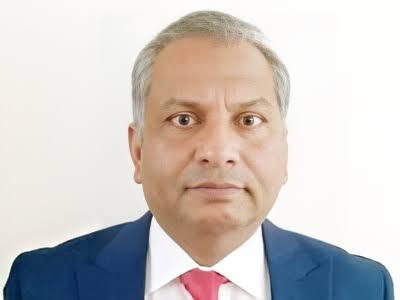
Dr. Sailesh Kumar Jha, former Chief Asia Economist at Credit Suisse AG Singapore
By Tengku Noor Shamsiah Tengku Abdullah
KUALA LUMPUR – In a world of economic uncertainty and geopolitical turbulence, Malaysia has managed to implement fiscal reforms with surprising deftness, according to Dr. Sailesh Kumar Jha, a distinguished economist and financial market strategist whose insights are informed by over two decades at the pinnacle of global finance.
Dr. Jha, a former Chief Asia Economist at Credit Suisse AG Singapore, has navigated senior roles across investment banking and buy-side research in the United States, Singapore, Hong Kong, Malaysia, the Philippines, and Taiwan.
Hedge fund analysis
His track record speaks volumes. Over the past 20-plus years, Dr. Jha’s market calls have outperformed major global passive funds and hedge funds returns in four of five periods since 2003, avoided major drawdowns during the 2007-2010 financial crisis by moving to cash, and between 2022 and 2025 delivered investment strategy returns more than four times those of passive funds and seven times the hedge fund average. His investment strategy across conventional and alternative asset classes has consistently achieved relatively high Sharpe ratios in emerging market trades over the last around twenty years.
Financial planning tools
A PhD economist from the University of Washington, USA, specializing in macroeconomics and time series econometrics, Dr. Jha is recognized as a trade policy expert who worked on China’s entry into the World Trade Organization and possesses deep familiarity with the GATT Uruguay and Doha rounds of negotiations. His expertise extends to the geopolitics of the Middle East, China, India, and the United States, supported by a wide network of contacts at global central banks and proven forecasting capabilities using proprietary econometric models.
Speaking in an exclusive interview, Dr. Jha offered a positive assessment of Prime Minister Datuk Seri Anwar Ibrahim’s handling of the economy and financial markets, particularly in implementing crucial fiscal reforms that stabilised the ringgit and restored investor confidence.
Perfect Timing and Strategic Positioning
coordinated dollar selling ceased, and the DXY index has since stabilized in a 96 to 99 range.
Praise for Measured Leadership
Despite acknowledging his initial concern about the Malaysian government’s willingness to deliver reforms, Dr. Jha has revised his assessment.
“In my opinion, as an outsider, in this very volatile world of ours where all kinds of problems and dislocations are happening, my conclusion is that the Malaysian leadership has handled it very well,” he said, referring to Prime Minister Anwar Ibrahim.
What does “handling it well” mean in this context? Dr. Jha argued that maintaining a measured, mutual understanding approach represents sophisticated statecraft in today’s challenging and fast changing geopolitical environment.
Malaysia’s balanced diplomacy, combined with timely fiscal reforms and other significant policy reforms, has positioned the country to navigate a turbulent international landscape while maintaining economic stability.
Looking Ahead
In conclusion, in 2026 as global geopolitical conditions remain in flux, the uncertainty on US global economic policy remains large, and the FED is at a turning point as substantive policy interest rate cuts are behind us and the risks of policy interest rate hikes in early 2027 are building, Malaysia will be considered by international investors to be an important destination in Southeast Asia to invest in its currency, equity, and government bond markets.