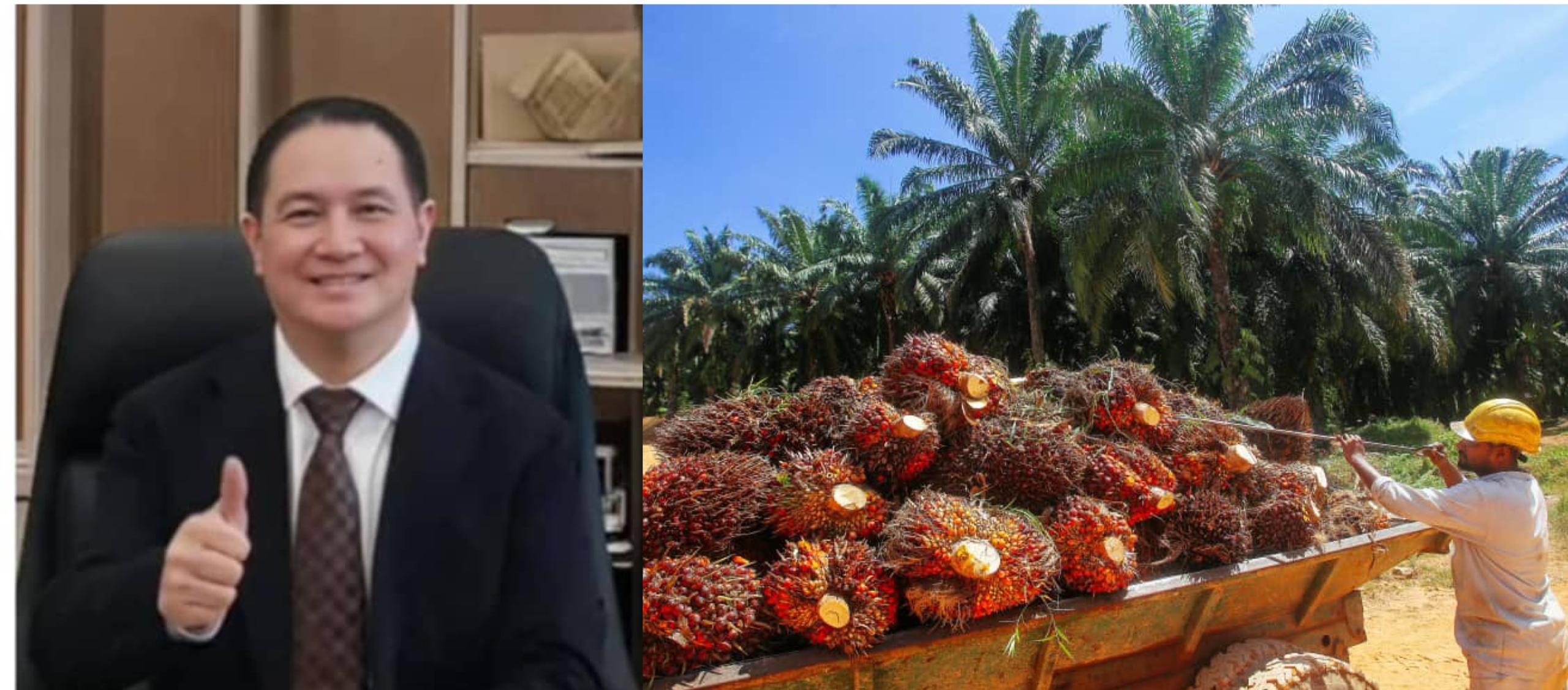
KOTA KINABALU: Dato’ Victor Peter Paut, recently appointed as the Deputy Chairman of Sawit Kinabalu Sdn Bhd and Borneo Samudera Sdn Bhd, expressed confidence that the palm oil industry will remain a key driver of Sabah’s economy.
This confidence aligns with ongoing efforts to strengthen the development of the downstream industry and empower the state’s strategic industrial zones.
In the first half of last year alone, the export value of Sabah’s palm oil was estimated to exceed RM10 billion, reflecting the significant contribution of this sector to both the state and national economy.
He stated that this strong performance demonstrates the palm oil industry’s ability to generate sustainable export revenue and consistent income growth, provided it continues to be enhanced through innovation, value addition, and strict adherence to sustainability standards.
Here is the complete transcript of the interview with Jesselton Times and Asia Times.
Question 1: In your opinion, Dato’, what is the significance of the palm oil industry to the economy of Sabah?
Dato’ Victor: It is undeniable that the palm oil industry serves as the backbone of Sabah’s economy. It not only contributes significantly to the state’s export revenue but also provides a source of income for over 31,000 registered smallholders and rural communities. In addition to upstream activities, this industry also creates job opportunities through downstream activities such as palm oil processing, biodiesel production, oleochemicals, and palm-based food products. This extensive value chain makes the palm oil industry a pillar of economic stability in rural Sabah.
Question 2: How do you view the potential of the palm oil industry in Sabah?
Dato’ Victor: The potential is immense. Sabah is not only the largest producer of crude palm oil (CPO) in Malaysia but also has the capacity to expand into high-value downstream industries, including biomass, bioenergy, and green technology-based products. In this context, the development of industrial clusters such as the Sawit Kinabalu Sandakan Industrial Park (SK SIP) and POIC Lahad Datu plays a crucial role in enhancing value-added activities within the state’s palm oil industry.
Question 3: What is the current area of oil palm cultivation in Sabah?
Dato’ Victor: According to the latest statistics for 2024, Sabah has over 1.48 million hectares of oil palm plantations, representing more than 26 percent of the total oil palm cultivation area in Malaysia. The East Coast region, particularly Sandakan, remains one of the main contributors to the state’s palm oil production.
Question 4: How does Dato’ perceive the role of industrial hubs like SK SIP and POIC Lahad Datu?
Dato’ Victor: The Sawit Kinabalu Sandakan Industrial Park (SK SIP) in Sandakan and POIC Lahad Datu serve a crucial role as catalysts for the development of the palm oil industry in Sabah. Both industrial parks act as strategic investment hubs for the palm oil sector and provide comprehensive bulk and liquid cargo infrastructure. It is worth noting that SK SIP was previously known as Sawit POIC, Sandakan and has undergone a rebranding process to become Sawit Kinabalu Sandakan Industrial Park (SK SIP). This rebranding reflects the new direction of the park as a more integrated and inclusive industrial hub. SK SIP offers comprehensive infrastructure, including bulk and liquid cargo facilities, strategic port access, and utilities that support investments in downstream industries, biomass, energy, and food processing. This transformation aligns with Sabah’s aspirations to strengthen the industrial value chain and attract high-quality investments to the East Coast of the state.
Question 5: Does the palm oil industry contribute to rural communities?
Dato’ Victor: The involvement of over 31,000 smallholders clearly indicates that the palm oil industry is a primary source of livelihood for rural communities in Sabah. Through certifications such as the Malaysian Sustainable Palm Oil (MSPO), smallholders are guided to practice sustainable agriculture, thereby enhancing their competitiveness and access to global markets.
Question 6: What are the main challenges faced by the palm oil industry in Sabah?
Dato’ Victor: The palm oil industry faces several challenges, including a shortage of labor, aging trees, productivity issues, and rising agricultural input costs. Additionally, international pressures related to deforestation, habitat loss, and greenhouse gas (GHG) emissions require the industry to continuously strengthen sustainable practices. Nevertheless, I am confident that through the modernisation of plantations, the implementation of technology, adherence to MSPO standards, and the development of industrial clusters such as SK SIP and POIC Lahad Datu, the palm oil industry in Sabah will remain relevant and resilient in the long term.