By Datuk Ts Dr. Hj Ramli Amir, former President of the Chartered Institute of Logistics and Transport (CILT) Malaysia and Vice-President of CILT International for Southeast Asia
KOTA KINABALU: On paper, Federal Route 22, which cuts through Kundasang and Ranau, is classified as operating at “Level of Service A” – supposedly one of the smoothest, least congested categories for a road.
In reality, residents, businesses and tourists can be trapped in gridlock for 6 to 8 hours on a journey that should take only 10 to 15 minutes.
This stark contrast between statistics and lived experience lies at the heart of the recent statement by Deputy Works Minister Datuk Seri Ahmad Maslan, confirming that there are no plans to upgrade Federal Route 22 in the Kundasang and Ranau town areas under the Highway Network Development Plan 2040 (HNDP 2040).
His justification: the road is still LOS A, and congestion occurs only on weekends and during festive seasons.
That reasoning reveals a narrow, technocratic view at the federal level – one that sees Sabah, particularly Ranau and Kundasang, primarily through a traffic-engineering and “pure economics” lens, rather than as a world-class tourism hub that demands a network vision, not just vehicle counts.
LOS A as a shield against reality
In technical manuals, Level of Service (LOS) A describes very smooth traffic, high speeds, minimal interaction between vehicles, and a comfortable driving experience. On paper, it suggests there is no urgent need for upgrades.
The way this metric is being used to dismiss calls for upgrading Ranau–Kundasang is deeply problematic:
• LOS assessments typically rely on average daily volumes or “normal” peak hours, not the intense tourism peaks on weekends and holidays that drive the local economy.
• When the deputy minister himself acknowledges that extreme congestion occurs on weekends and during festive periods, it is intellectually disingenuous to hide behind an LOS A label to argue that there is no current need to act.
• In tourism corridors, the “abnormal” peaks are in fact the most economically meaningful periods. Averaging them away does not solve the problem – it erases them from the spreadsheet while people suffer on the ground.
•
By leaning on LOS A, federal decision-makers are choosing a comforting statistical picture over the messy reality of an overburdened tourism corridor. For a place like Ranau–Kundasang, that is policy blindness, not prudence.
Ranau–Kundasang is not just another federal road
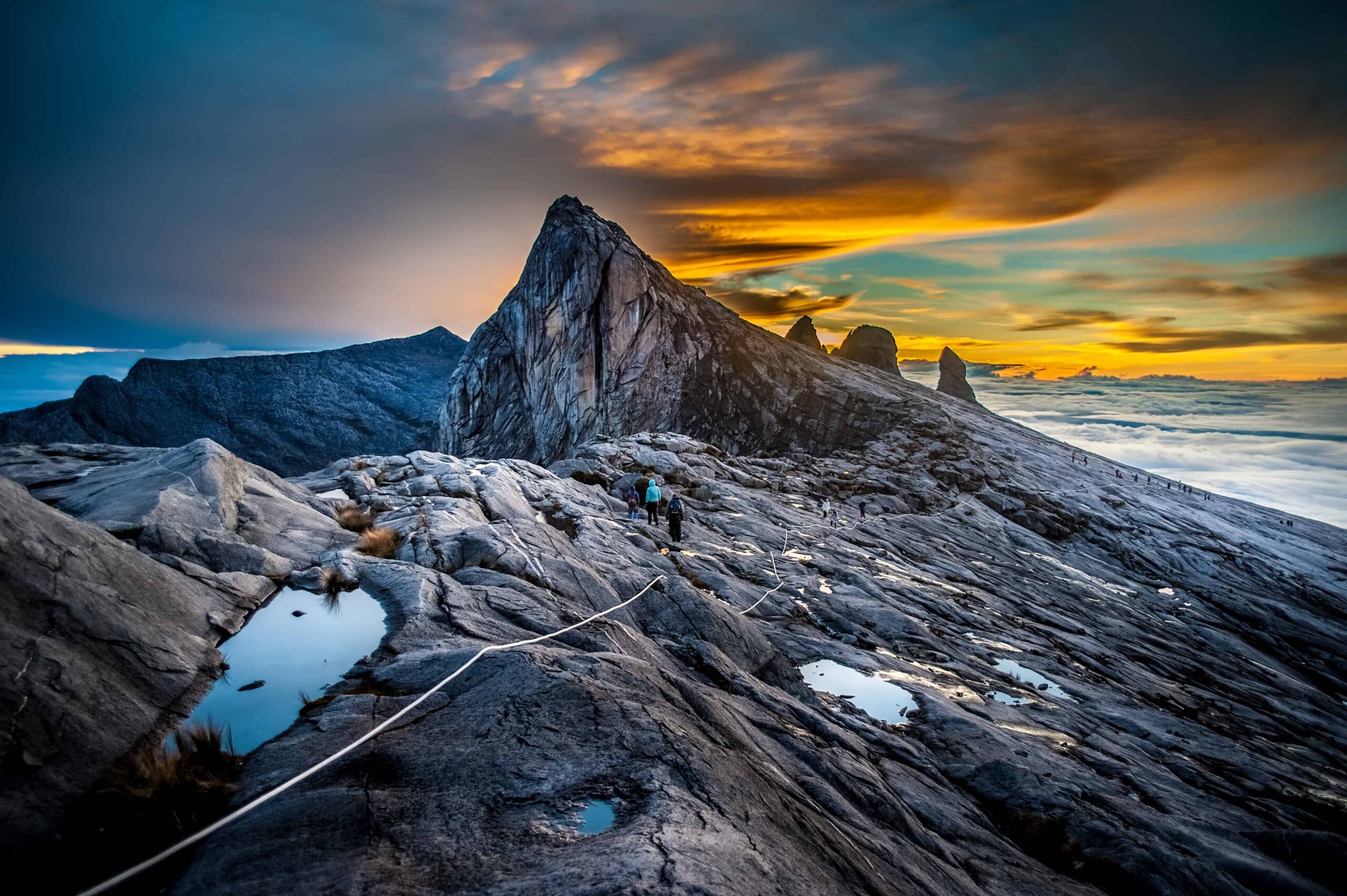
Ranau and Kundasang are not ordinary inland towns. They form a critical tourism corridor linking Kota Kinabalu to Mount Kinabalu, a UNESCO World Heritage Site, as well as to national parks, highland resorts, village homestays, vegetable farms, flower gardens and a wide array of agro-tourism attractions that shape Sabah’s global image.
Yet, judging from the structure of HNDP 2040, Ranau–Kundasang appears to have been treated like any other federal route. There is no specific upgrade for Federal Route 22 within the Kundasang and Ranau town stretches in the plan. Instead, the plan offers alternative alignments under Pan Borneo Phase 2 after 2030, such as Kiulu–Pahu–Tamparuli and Pahu–Randagong–Ranau.
This reveals several underlying flaws:
• The value of this corridor is being measured by “how many vehicles per day” rather than “how much tourism revenue, jobs, SME income and destination branding it supports”.
• Because average traffic volumes may be lower than on certain urban highways, the route is quietly downgraded in priority, even though its impact on Sabah’s tourism reputation is enormous.
• Key risks – tourists missing flights, needing to cut trips short, or black-marking Sabah in online reviews after getting stuck for hours – do not appear to be integrated into the economic appraisal model.
•
In short, Sabah is being assessed with a volume-based calculator, not a tourism strategy lens.
“Only weekends” is not a defence – it is an admission
When a federal leader says congestion occurs “mainly on weekends and festive seasons”, it may sound like an attempt to reassure the public that the problem is limited. For a tourism-driven locality, that line is actually an admission of how poorly the reality is understood.
The economies of Ranau and Kundasang depend almost entirely on those very weekends and school or public holidays. Hotels, homestays, restaurants, wet markets, vegetable sellers, roadside stalls, small tour operators and guides all rely on peak days to survive.
Framing congestion as “only on weekends” is effectively to say:
• “We are not too concerned about disruptions during the most critical periods for local income.”
• “As long as weekdays are fine, we can downplay the pain borne by the tourism economy during its main earning window.”
For any serious tourism policy, this is upside down.
Predictable and reasonable travel times on weekends are more important than smooth weekday flows. The “10 minutes or 8 hours” uncertainty does not just frustrate drivers – it shapes global perceptions through social media, travel blogs and reviews.
Once the narrative of “Sabah roads can trap you for hours” starts to spread, it will not be Federal Route 22 alone that suffers; it will be Sabah’s overall competitiveness as a destination.
Pan Borneo after 2030: distant promise, present pain
The argument that future Pan Borneo Phase 2 alignments will eventually provide alternatives sounds politically comforting, but it does not address the core question: what about the decade between now and then?
Projects “after 2030” are not a remedy for today’s gridlock. Until there is a clear implementation schedule, secured funding and visible on-the-ground mobilisation, Pan Borneo Phase 2 remains a distant promise. In the meantime, thousands of road users – including international tourists – must bear the cost of uncertainty, and local traders must live with the hidden economic losses that never appear in federal spreadsheets.
What makes it worse is that the works mentioned along the corridor focus mainly on landslide repairs and safety at specific points, not on a holistic plan to increase capacity, improve junctions and reconfigure bottlenecks in the high-demand tourism segments of the route.
In other words, engineering band-aids are being applied where a strategic redesign is needed.
Shifting responsibility to the State – and what that signals
The federal line that there has been “no formal application” from the Sabah State Government under the current Malaysia Plan cycles, coupled with a suggestion that the local MP should discuss with the state government and submit proposals, sends a troubling signal.
Federal Route 22 is a federal road serving a flagship tourism destination for the entire country. Waiting for the state to “apply” before acting shows a lack of proactive strategic thinking at the national level. If the ministry can independently identify and advance Pan Borneo alignments, why can it not similarly identify Ranau–Kundasang as a national tourism corridor deserving priority attention without being prompted?
From the perspective of federal–state relations, this feeds the perception that Sabah is still treated as a supplicant rather than a strategic partner whose unique economic profile is properly understood and anticipated.
Time to change the way Sabah is measured
Ranau–Kundasang is not just about upgrading a single road. It is a litmus test of how federal policy treats Sabah: as a peripheral region to be managed with generic formulas, or as a tourism engine that requires its own evaluation framework.
As long as federal planning clings to a narrow “pure economics” model centred on average volumes and weekday LOS, Sabah’s most critical tourism corridors will remain under-prioritised. What is needed is a reset of the metrics:
• Incorporate tourism value, destination reputation, and travel-time reliability as core indicators.
• Treat weekend and holiday peaks as central to the analysis, not anomalies to be averaged away.
• Recognise that for a world-facing destination, one viral story of an 8-hour jam can undo years of marketing and investment.
•
Ranau and Kundasang are Sabah’s showcase to the world. If even the road to this showcase is left to be governed by numbers that ignore how the place actually lives and earns, the problem is no longer just with the traffic – it is with how the federal leadership chooses to see Sabah. And that deserves to be challenged, loudly and persistently.tly.