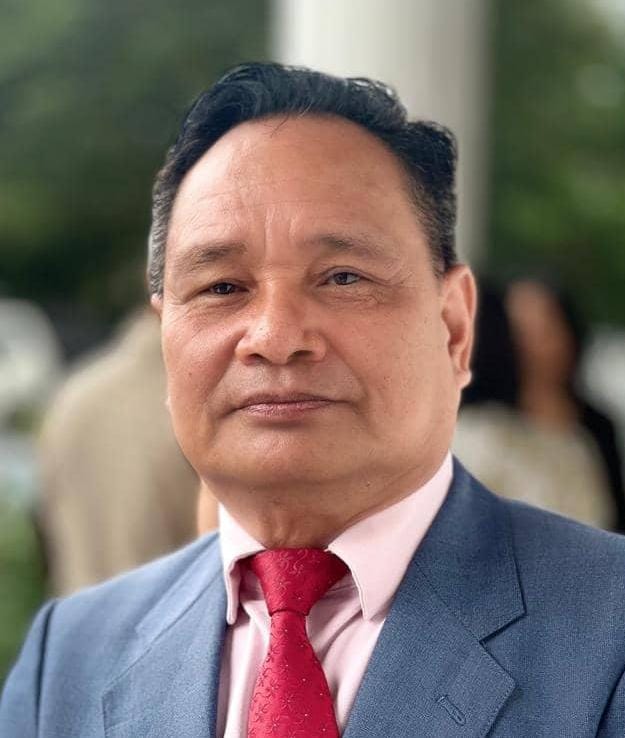
By Dr Jikat Binol Darimbang
KOTA KINABALU: Recently, the former two-time Prime Minister of Malaysia, Tun Dr. Mahathir Mohamad, suggested the establishment of a committee named “Payung Besar” – an organization that purportedly seeks to restore the political and economic supremacy of the Malays, as well as to address various issues that he asserts the current government has neglected.
Nevertheless, this proposal prompts several inquiries that warrant collective reflection. Why is the composition of this committee limited to Malays? What about the voices and representation of other ethnic groups who are also Malaysian citizens – including Indians, Chinese, and notably, the indigenous ethnic groups of Sabah and Sarawak such as KDMR (Kadazan, Dusun, Murut, Rungus) – who are also grappling with significant economic and developmental challenges?
DEB: Is it still relevant?
Since the New Economic Policy (NEP) was introduced in 1971, its goal has been to eradicate poverty regardless of race and to restructure the economy so that it is not based solely on a particular race.
However, more than 50 years have passed, why are non-Malay bumiputera groups – such as the KDMR community and Sarawak bumiputera – still lagging behind in terms of infrastructure, education, and economic opportunities?
Has the failure of previous policies to involve them comprehensively caused this imbalance?
If true, then any new “big umbrella” should not only shelter one ethnic group, as if only one race is worthy of being defended and elevated.
KDMR and the Indigenous People of Sabah: Second-Class Indigenous People?
Sabah is one of the richest states in terms of natural resources, yet its people are among the poorest in Malaysia.
Many rural areas still do not have access to roads, clean water, or proper health and education facilities.
While leaders in the Peninsula continue to talk about empowering the Malays, leaders in Sabah and Sarawak often have to push for their rights and development to be respected and expedited.
Doesn’t this indicate a significant imbalance in the central administration and the distribution of national resources?
If the “big umbrella” is only for the Malays of Peninsular Malaysia, then it is not a national initiative. It is more akin to a narrow political move – one that fails to understand the reality of diversity and the urgent needs of Malaysians outside Kuala Lumpur and Putrajaya.
The Future of Malaysia: For All or Just a Few?
Malaysia is a multi-ethnic, multi-religious, and multi-cultural country. The Constitution itself recognizes the special position of the Malays and indigenous people, including in Sabah and Sarawak.
It would be an injustice if future planning were to be exclusive, not inclusive.
We do not reject efforts to empower any community in need. But such efforts must be based on the principles of justice, equality, and humanity. Every Malaysian citizen in need of assistance, regardless of race or religion, deserves attention and action.
If Tun Mahathir truly wants to save the nation, then he needs to view the Malaysian nation as a whole – not just from the perspective of one race.
If you truly want to build a “big umbrella,” then make sure that umbrella is wide enough to protect all the people who seek shelter under it.